Fram Museum, Oslo Norway 2018
The Fram symbolizes the age of polar exploration. Built originally for Fridtjof Nansen, and reputed to be the strongest wooden ship ever built, it served in expeditions by four polar explorers: Nansen, Otto Sverdrup, Oscar Wisting, and Roald Amundsen.
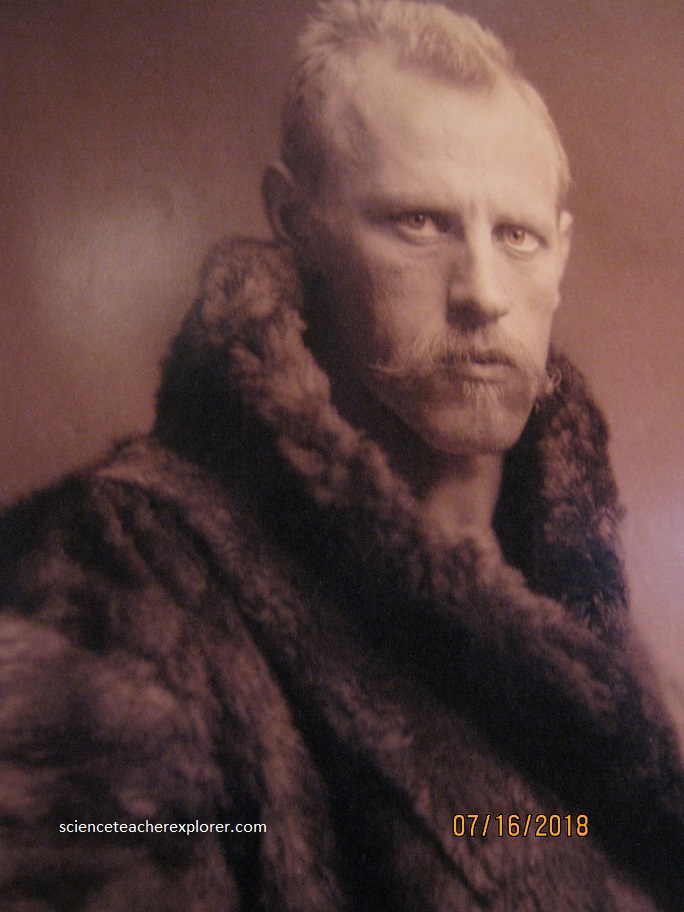
Mankind had explored most of the planet by the last decades of the 19th century. Earth’s polar regions remained one of few blank spots on the map and the last remaining territory for explorers and sportsmen. The competition to be first to the Poles was cut-throat.
Nansen required a ship especially adapted for the harsh conditions in the Arctic to sail further north than anyone. The biggest danger to the ships in the age sailing in the northern ocean was to be trapped in the ice during the winter. The ice would exert ever-increasing pressure on the hull of the ship, eventually crushing it completely. Nansen designed a ship that could ‘float’ over the ice. The shape of the Fram’s hull was designed in such a way that it would slowly deflect the ice and sliding down below the ship’s body and slowly lifting it unharmed. Furthermore, the rudder and propeller were designed to be retracted into the ship protecting them from damage. Additionally, The Fram could pack enough supplies to sustain its crew for at least 5 years. The ship had a windmill that ran a generator to provide electric power for lighting by electric arc lamps. Its hull was heavily insulated to ensure protection from the cold. The ship was given the appropriate name Fram, meaning “Forward” in Norwegian.
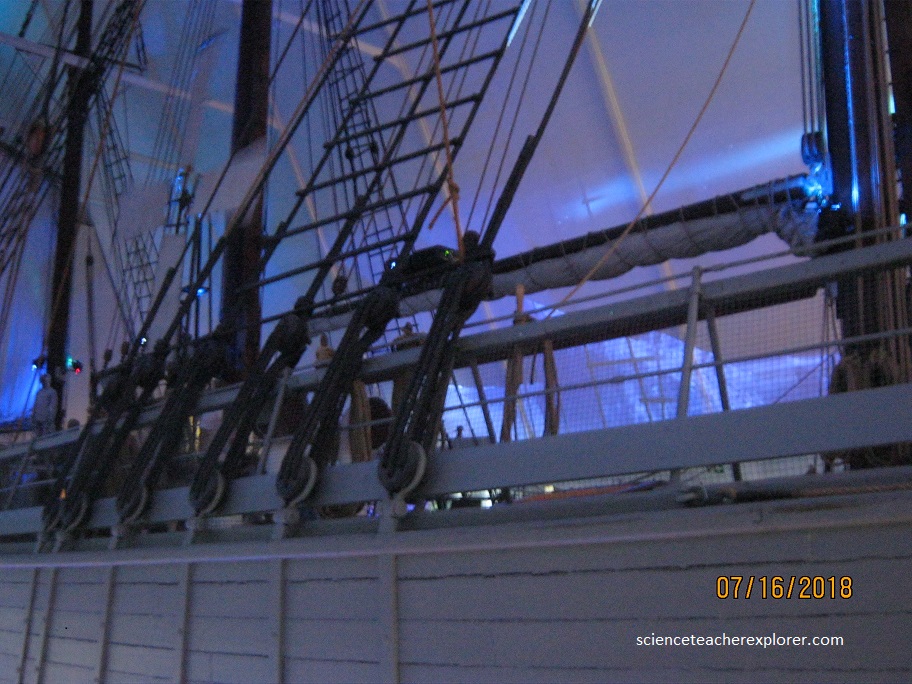
For its first polar mission, in 1893 Nansen launched a 3 year expedition attempting to reach the North Pole. The idea was to intentionally get the ship trapped in the ice and then float, carried by ocean currents, over the Pole. This expedition ended unsuccessfully in 1896.
Later, the Fram was used by Otto Sverdrup during his exploration of Canadian arctic between 1898 and 1902.
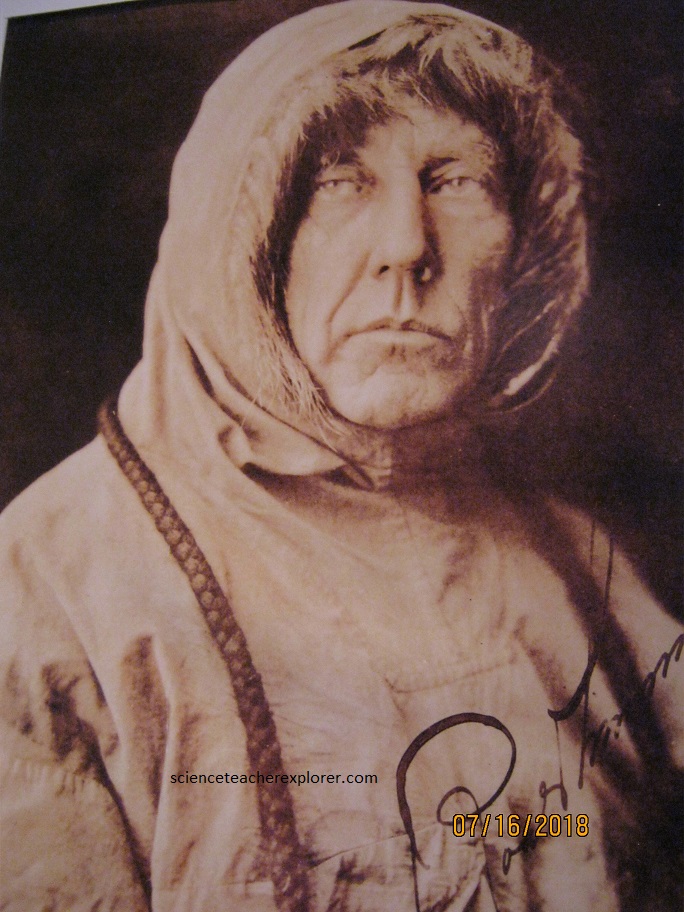
Perhaps the most famous expedition in which this vessel played a part was the ill-fated race to the South Pole between Roald Amundsen and British explorer Robert Falcon Scott, in 1910-1912. Amundsen gained world fame for winning the race to the Pole; Scott’s entire party died of exposure and starvation in route back, having reached the south pole secondly.
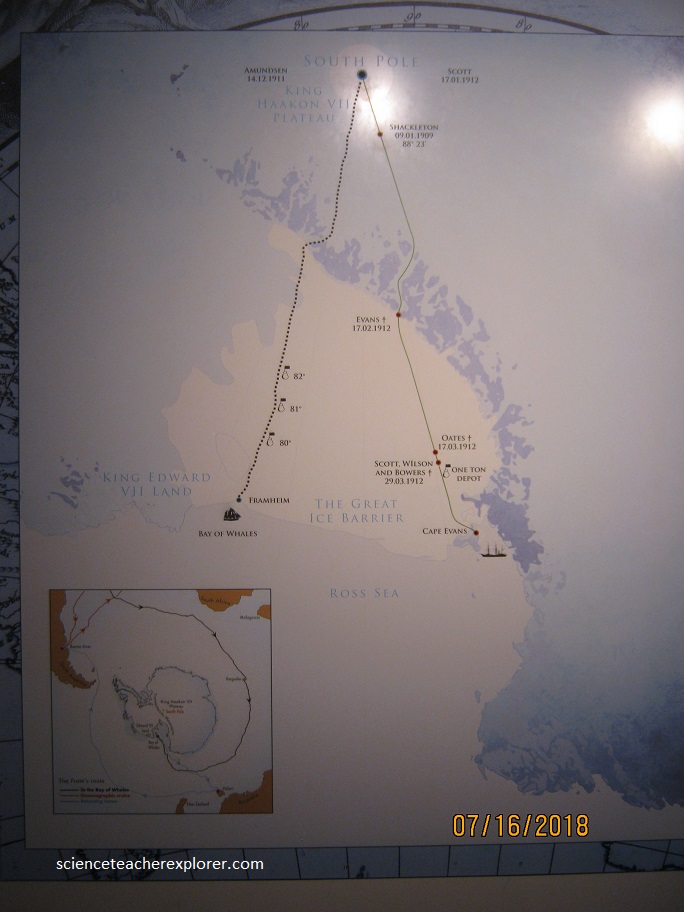

The Fram is the primary attraction at the museum, which also offers a good selection of material about the ship’s voyages and the history of Norwegian polar explorations. On display are maps, personal notes of explorers and variety of objects used in everyday life aboard this vessel. I was able to climb aboard and explore the insides of the ship, as well.
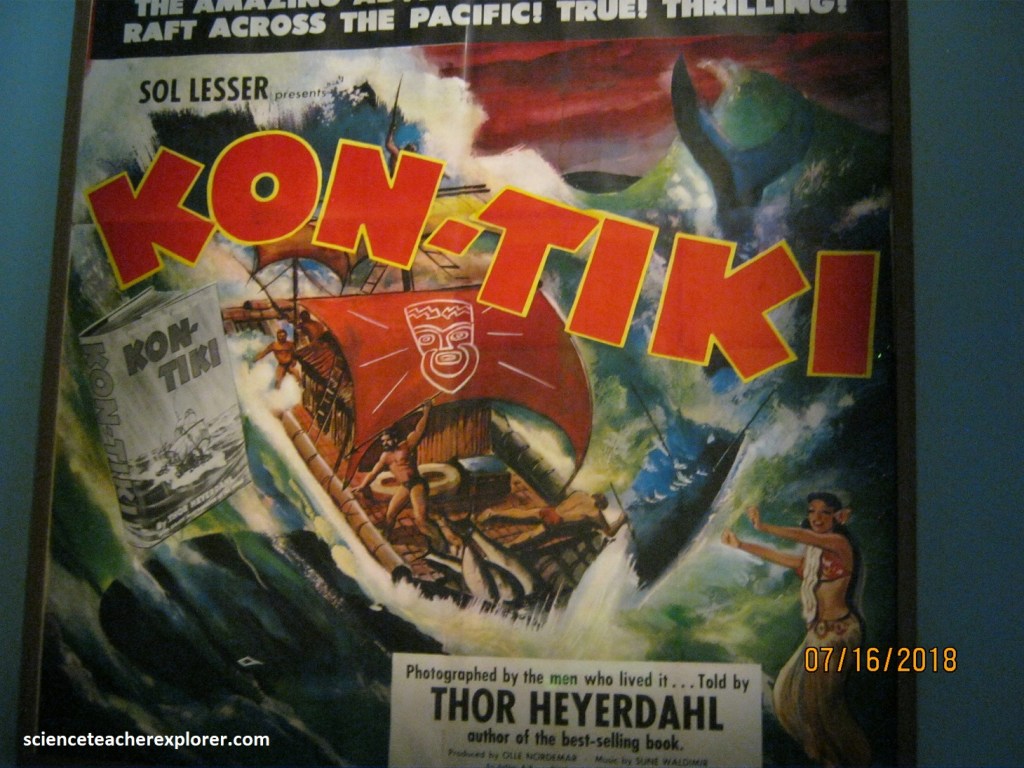
Movie & book poster of the Kon Tiki Expedition; (a Norwegian adverture).
Nearby the Fram Museum, is another building that celebrates the Kon Tiki adventure. The “Kon-Tiki expedition” was a 1947 journey by raft across the Pacific Ocean from Peru, South America to the Polynesian islands, (Tahiti), led by Norwegian explorer and writer Thor Heyerdahl. the raft was name “Kon-Tiki” after the Inca god Viracocha, for whom “Kon-Tiki” was said to be an original name. Heyerdahl’s full hypothesis states that a sun-worshiping blond/red-haired and blue-eyed Caucasian people, (whom Heyerdahol called the “Tiki people”), from Peru, South America, could have reached Polynesian during pre-Columbian times by drifting with the wind directions. His aim in mounting the “Kon-Tiki” expedition was to show, by using only the materials and techologies available to those people at the time, that there were no technical reasons to prevent them from having done so. Even though research overwhelmingly rejected this concept, Heyerdahl also did not believe in the western origins of Polynesians, whom he believed were too primitive to sail against the wind and currents.
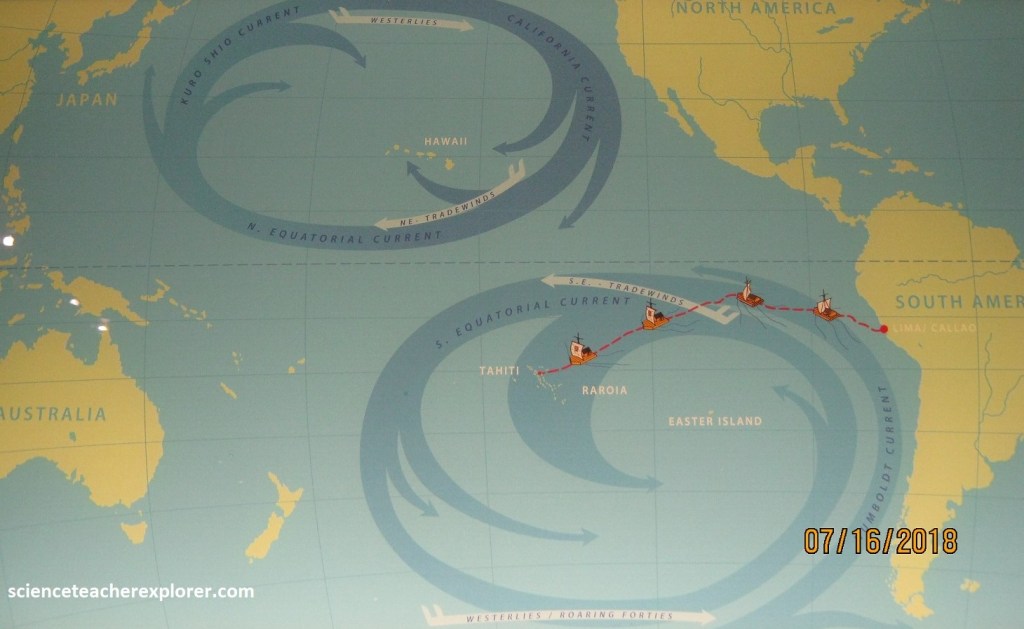
The Kon-Tiki Expedition began on April 28th, 1947. Heyerdahl and 5 companions sailed the raft for 101 days over 6,900 km across the Pacific Ocean before smashing into a reef at “Raroia” in the Tuamotus, Tahiti, on August 7th, 1947. The crew made successful landfall and all returned safely.
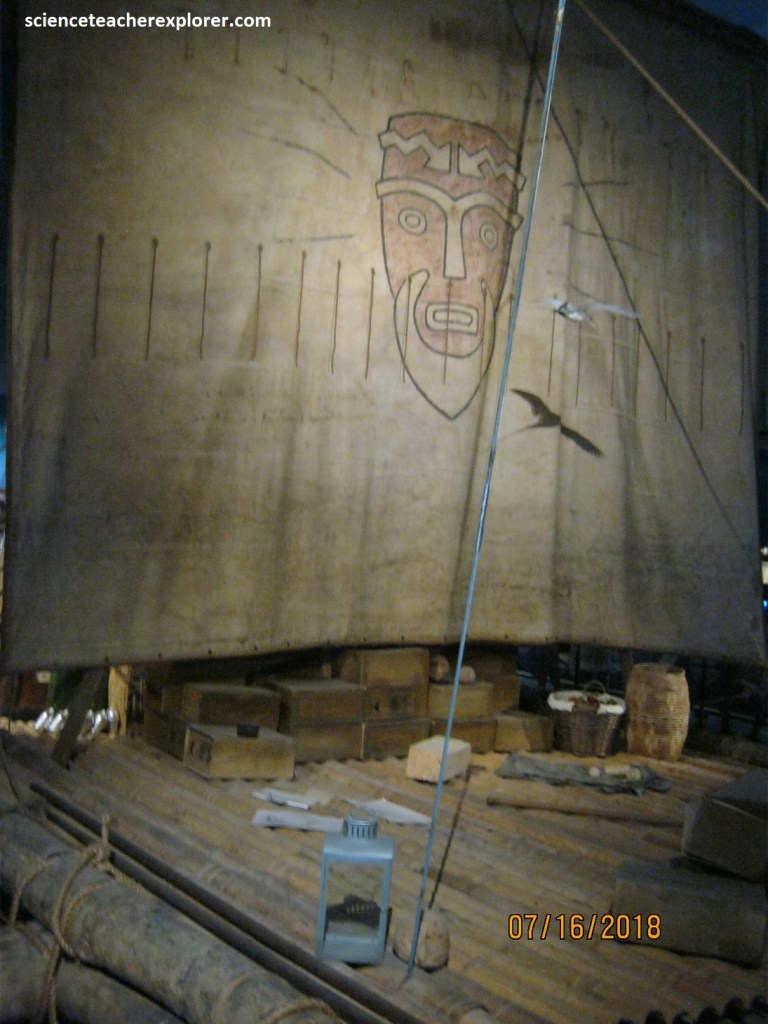
However, the expedition carried some modern equipment, such as a radio, watches, charts, sextant, and metal knives; Heyerdahl argued they were incidental to the purpose of proving that the raft itself could make the journey. [But this would have been a psychology difference for the ancients].
Thor Heyerdahl’s book about his experience became a bestseller. It was published in Norwegian in 1948 as “The Kon-Tiki Expedition: By Raft Across the South Seas”. Later a documentary film won an Academy Award in 1951.
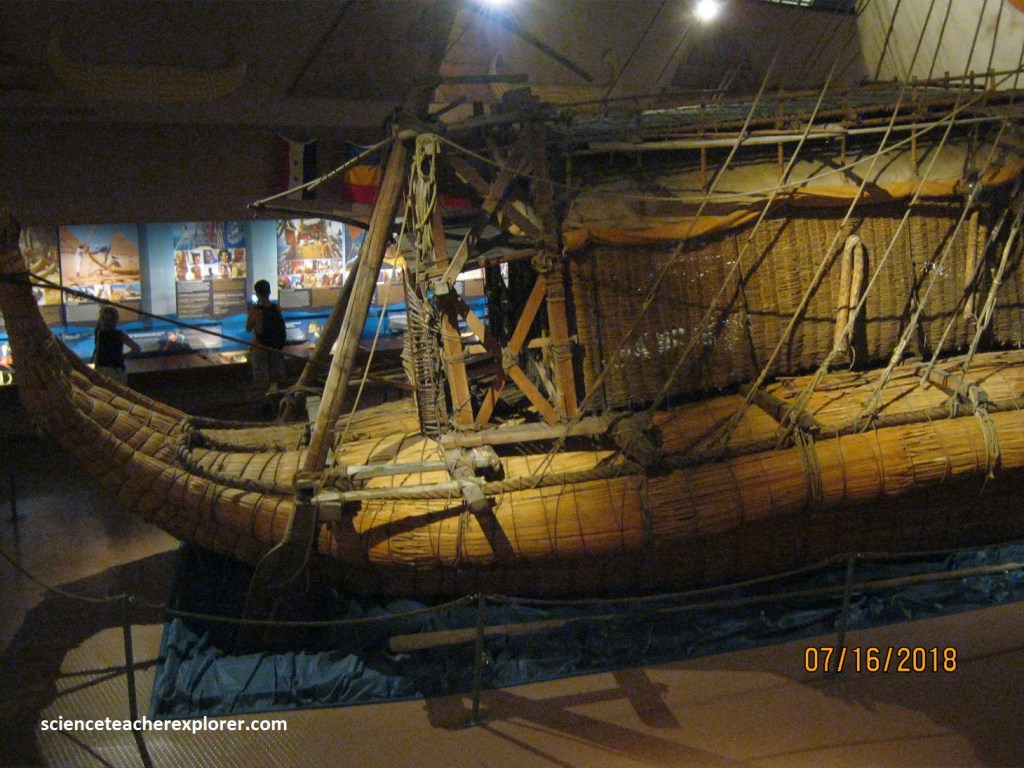
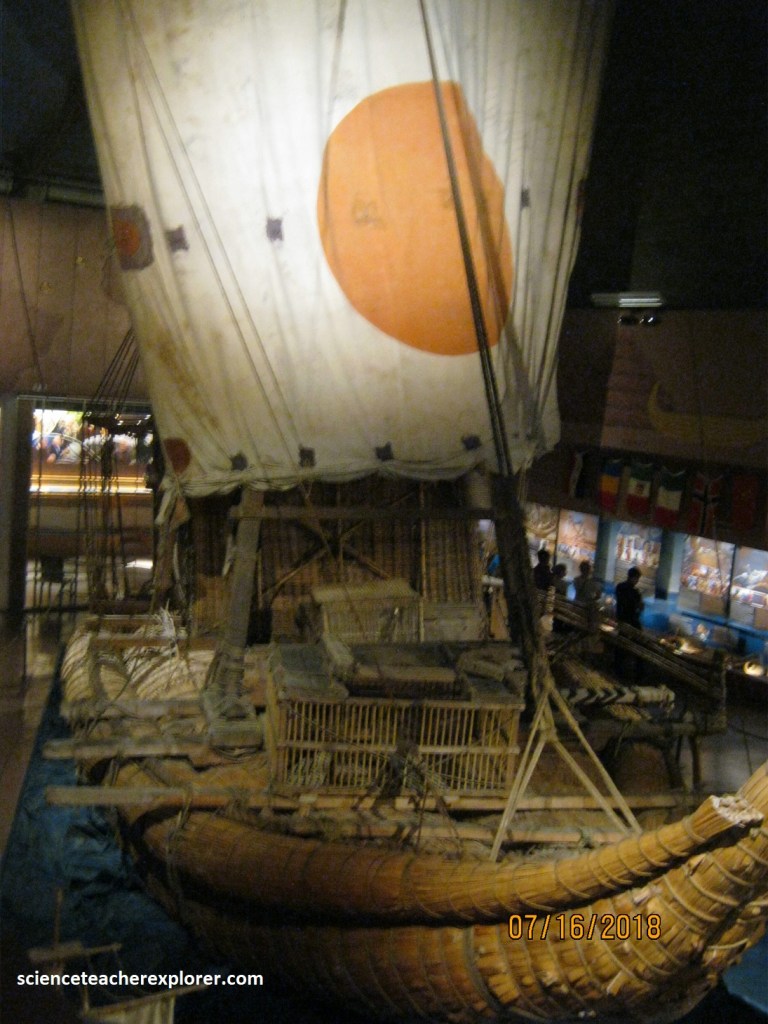
I of course visited the raft, (pictured above), in Oslo, Norway 2018. Since 1947, there were at least 7 copycats that attempted the expedition. But simply proving that something could be done, doesn’t mean that it was actually done in the Pre-Columbian times. This requires archaeological, linguistical, cultural, and genetic evidence to be scientific. The hypothesis smacks racism mixed with a bit of religious motif, for me to be comfortable with it. However, it was an incredible exploration adventure story that is worth noting.
 Explorer/Trekker