NASA Ames, 1996
In 1996, I received a grant from NASA to spend a couple of weeks at the Ames Research Center in California. The grant was from a program called NEWMAST. NEWMAST (NASA’s Educational Opportunities in Math, Science, and Technology) was a NASA program that provided opportunities for secondary science teachers to engage in intensive, 2-week research and professional development experiences at a NASA facility like the Ames Research Facility.
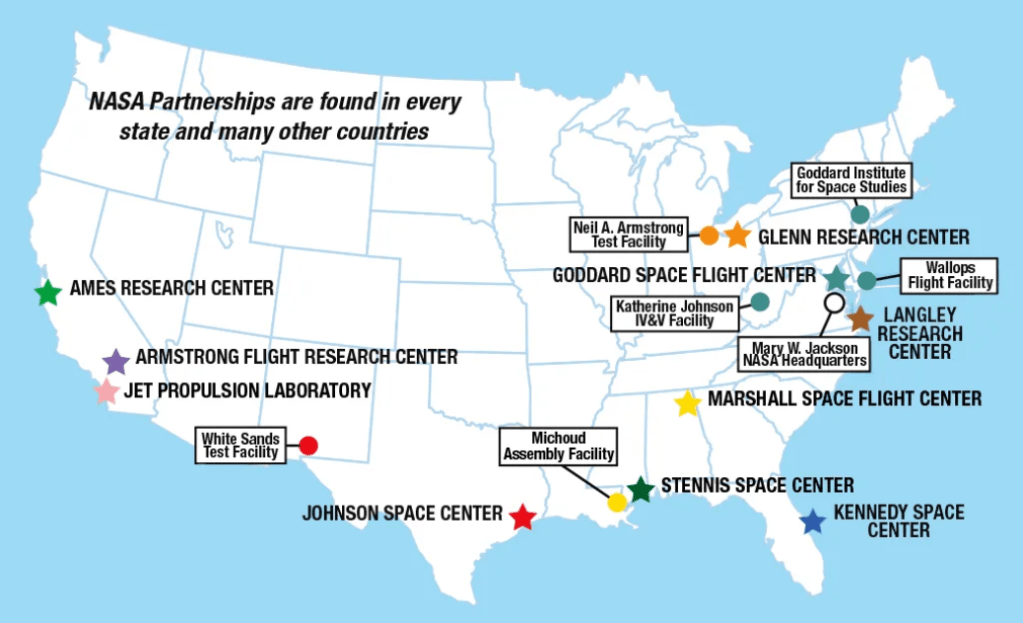
The NASA Ames Research Center is about 48 km south of San Francisco International Airport and about 24 km north of San Jose Airport. From San Francisco International Airport, I took US-101 (Bayshore Freeway) south. I then exited at 398A and turned right onto Moffett Blvd. and proceeded to the Main Gate Entrance.
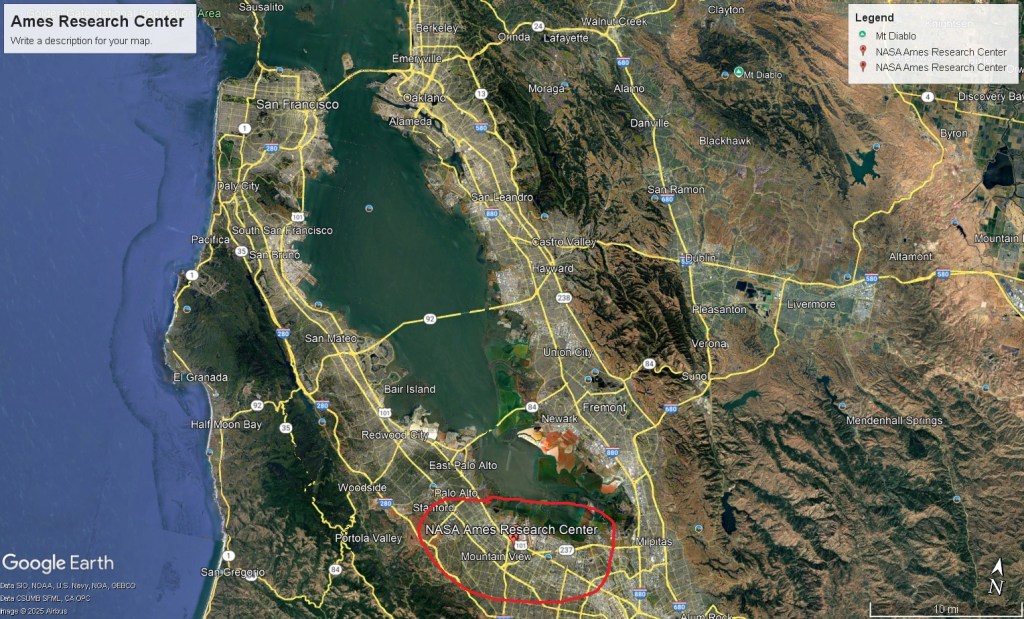
The Ames Research Center, also known as NASA Ames, is a NASA research center at Moffett Federal Airfield in California’s Silicon Valley. Ames was founded to conduct wind-tunnel research on the aerodynamics of propeller-driven aircraft; however, its role has expanded to encompass spaceflight and information technology. Ames played a role in many NASA missions.
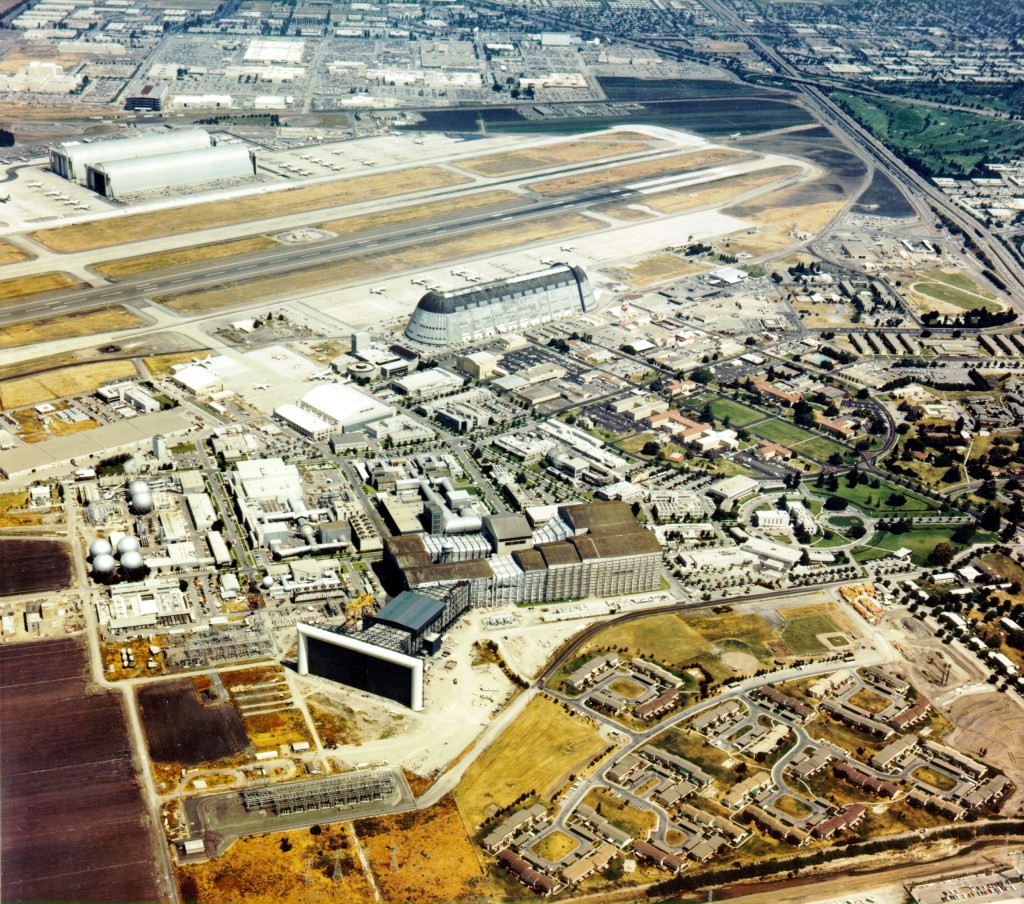
Pictured below, my first tour of the facility was the historic Hanger #1 on Moffett Field. This enormous structure was designed to house two dirigible airships in the early 1930s, called the USS Macon & USS Akron. Both utilized Helium gas and were 6,500,000 cubic foot ships with eight power plants, which enabled propeller movement in all directions. Amazingly, they also stowed onboard, four small scout or fighter-type aircraft, which could be brought onboard via retractable trapeze. I had no idea that you could land an airplane on one of these airships, (pictured below). {Note: the two pictures below and on the right were provided by a interpretive-folder on-site.}
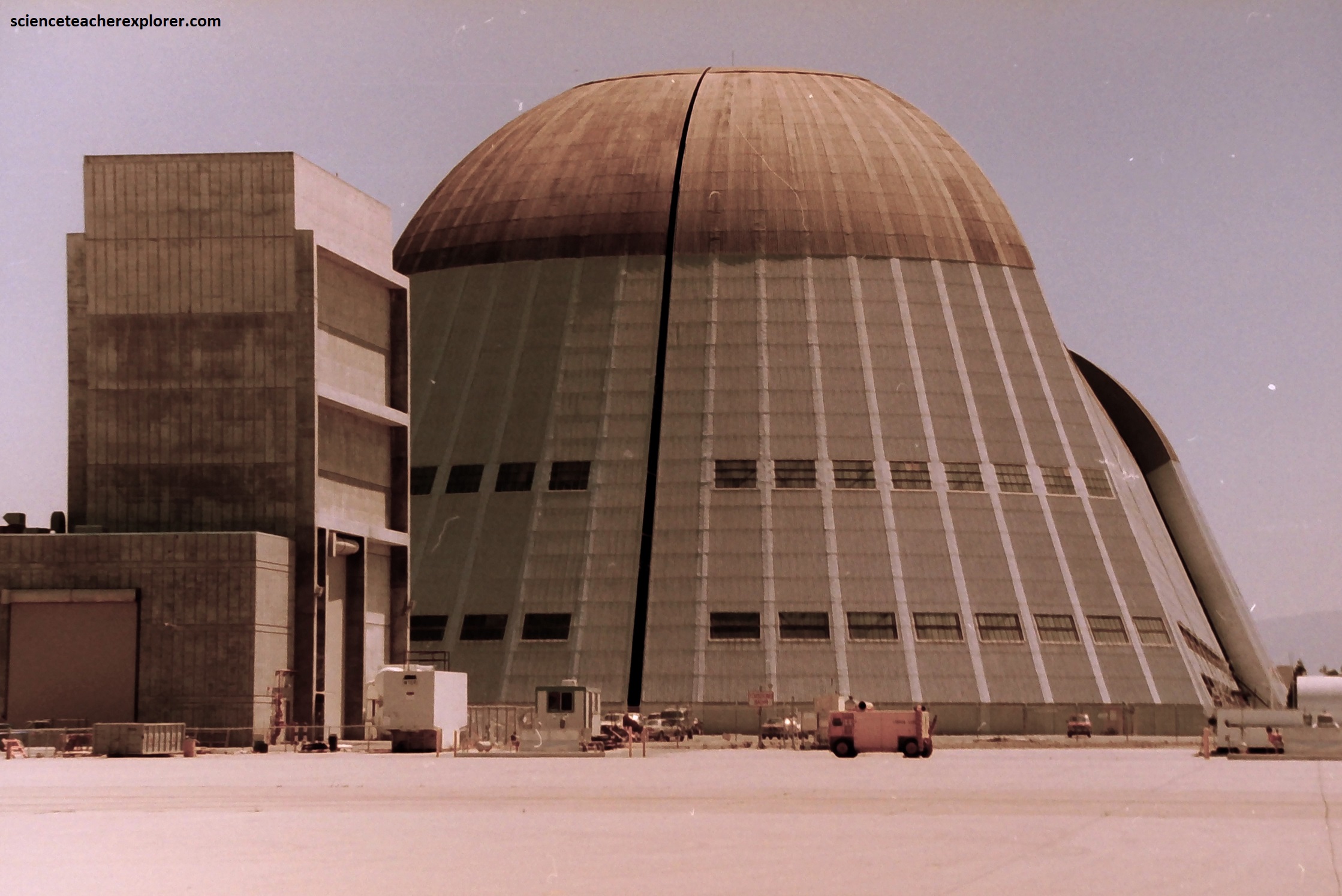
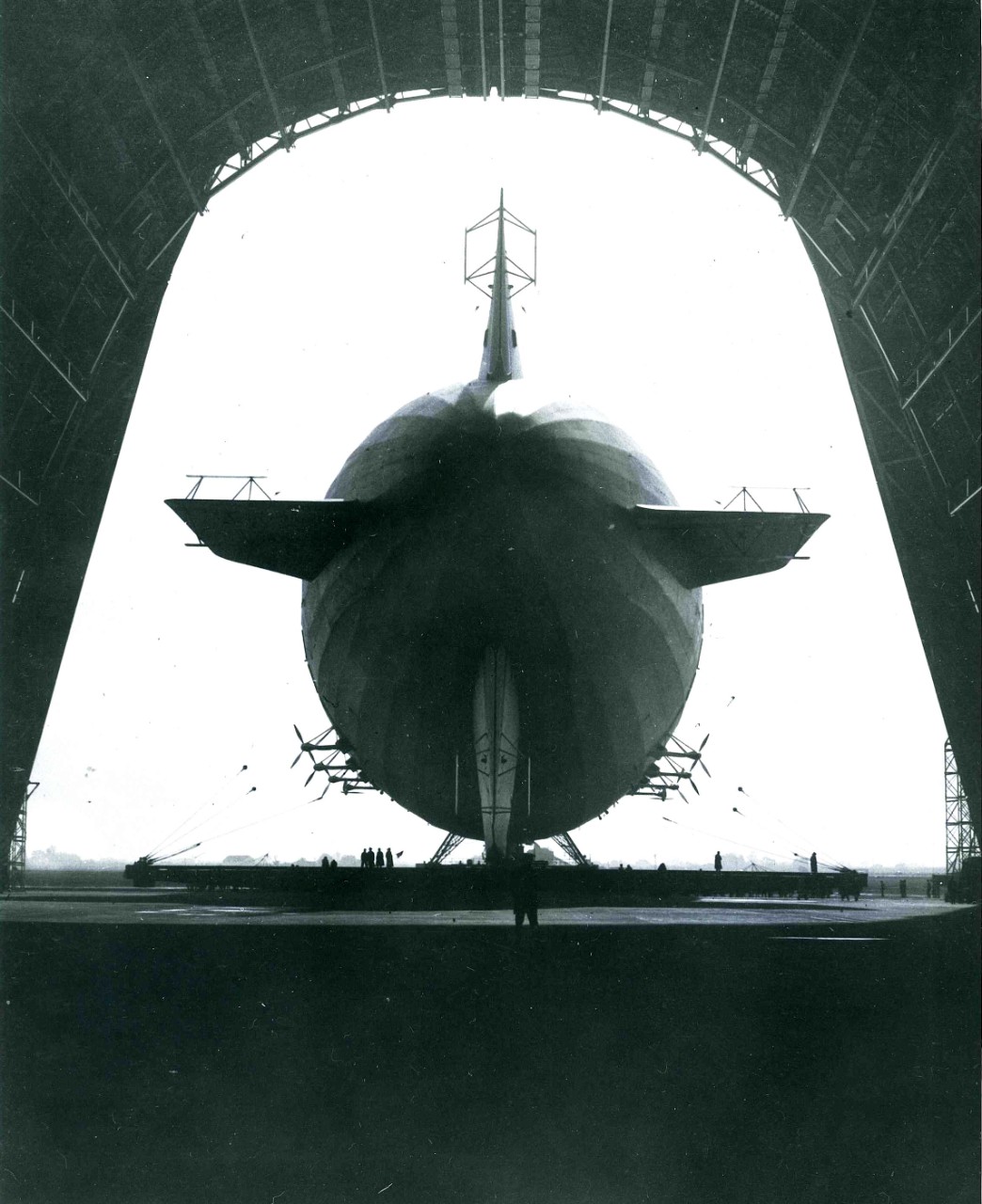
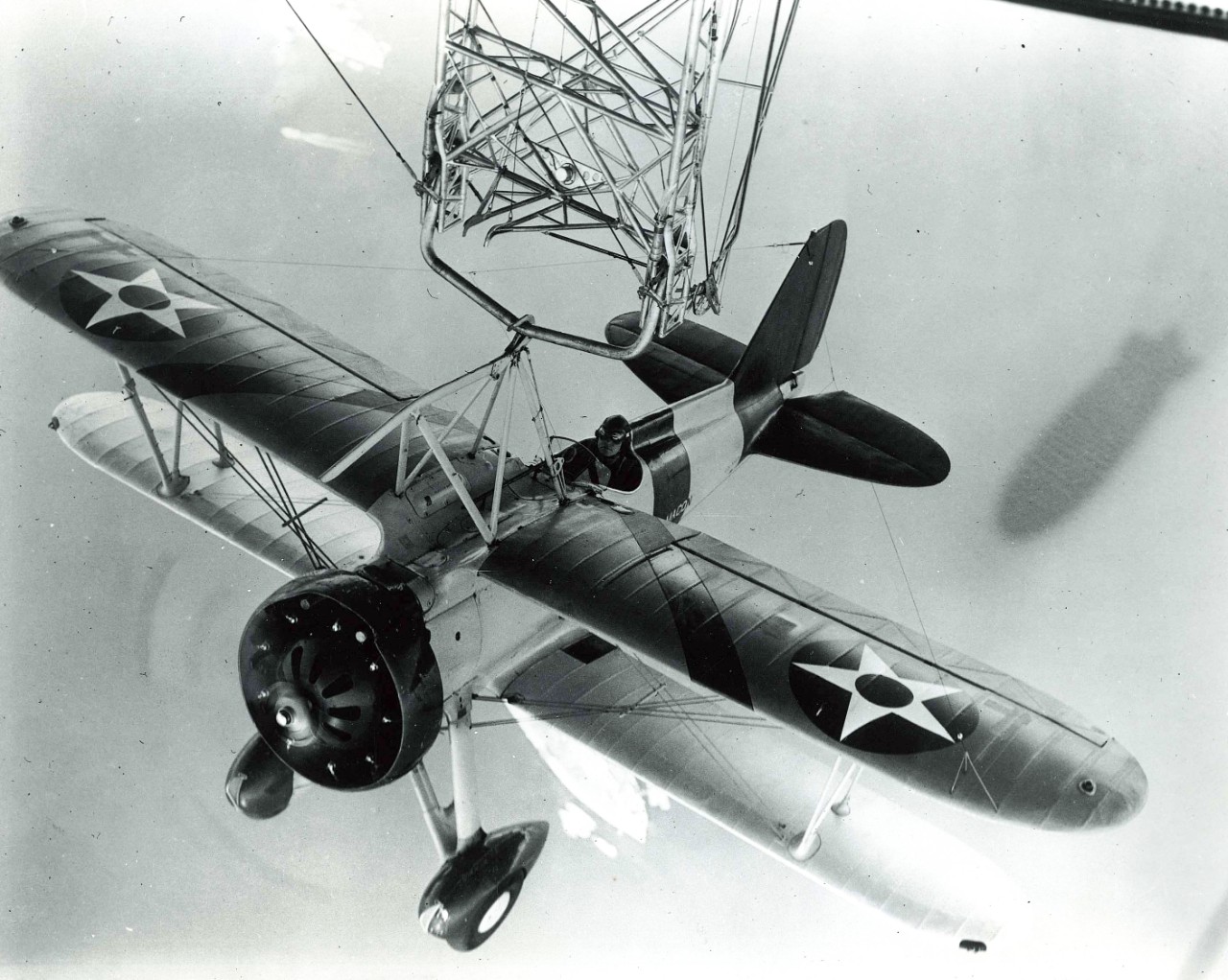
The USS Akron, crashed tail-first into the Atlantic Ocean in 1933, after flying into a violent storm off the New Jersey coast. Then the USS Macon encountered a storm off Point Sur, California in 1935. Her upper fin was torn off by a violent gust, which caused her to be brought down into deep waters. Two of her crew were lost. This loss ended the U.S. Navy’s rigid airship program.
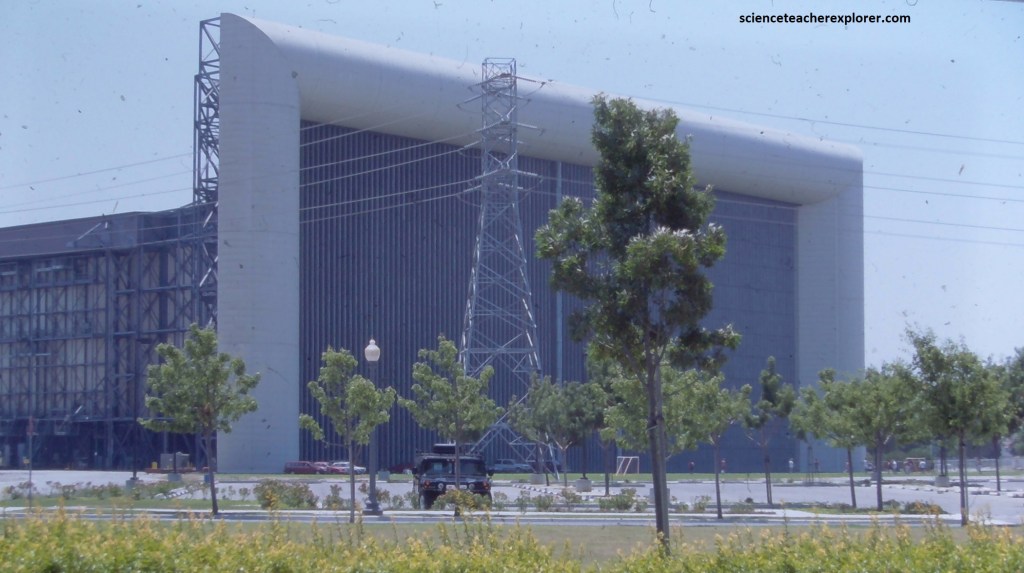
[My next tour was of the giant Wind Tunnels at Ames Research Center].
Ames is one of a few NASA Centers that has been conducting aero-science research using wind tunnels, flight testing, and complex computational analysis. NASA uses wind tunnels to test spacecraft and rockets. These vehicles are designed to operate in space, but spacecraft and rockets have to travel through Earth’s atmosphere to get there. Vehicles that return to Earth or go on to land on other planets also must travel through an atmosphere and their performance is evaluated using wind tunnels.
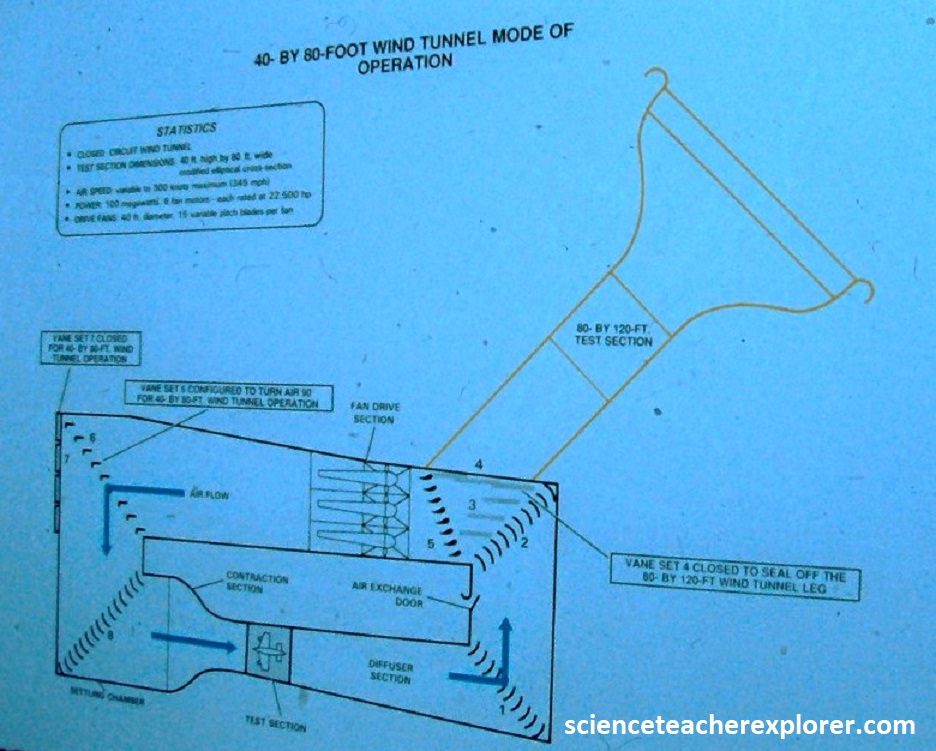
Home to the world’s two largest wind tunnels, the National Full-Scale Aerodynamics Complex at Ames is used to determine how air flows around full-scale vehicles and large-scale test models at speeds as fast as 190 km/hr, (120 miles/hr) or 100 knots. The first test section, built by NACA in 1944, has a cross-sectional area of 40 feet by 80 feet. In 1987, NASA added the second tunnel test section, which measures 80 feet by 120 feet, (pictured & imaged above).
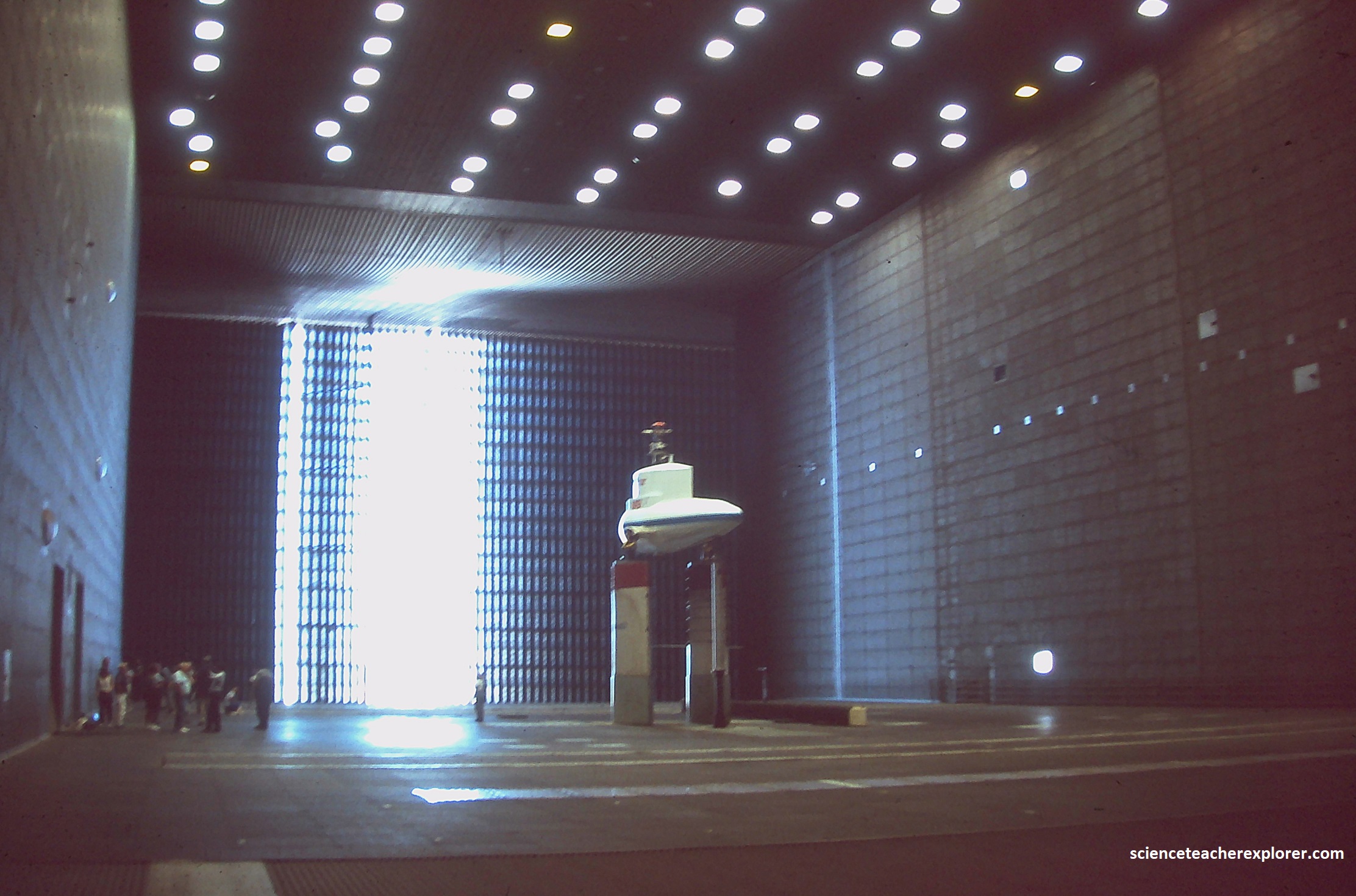
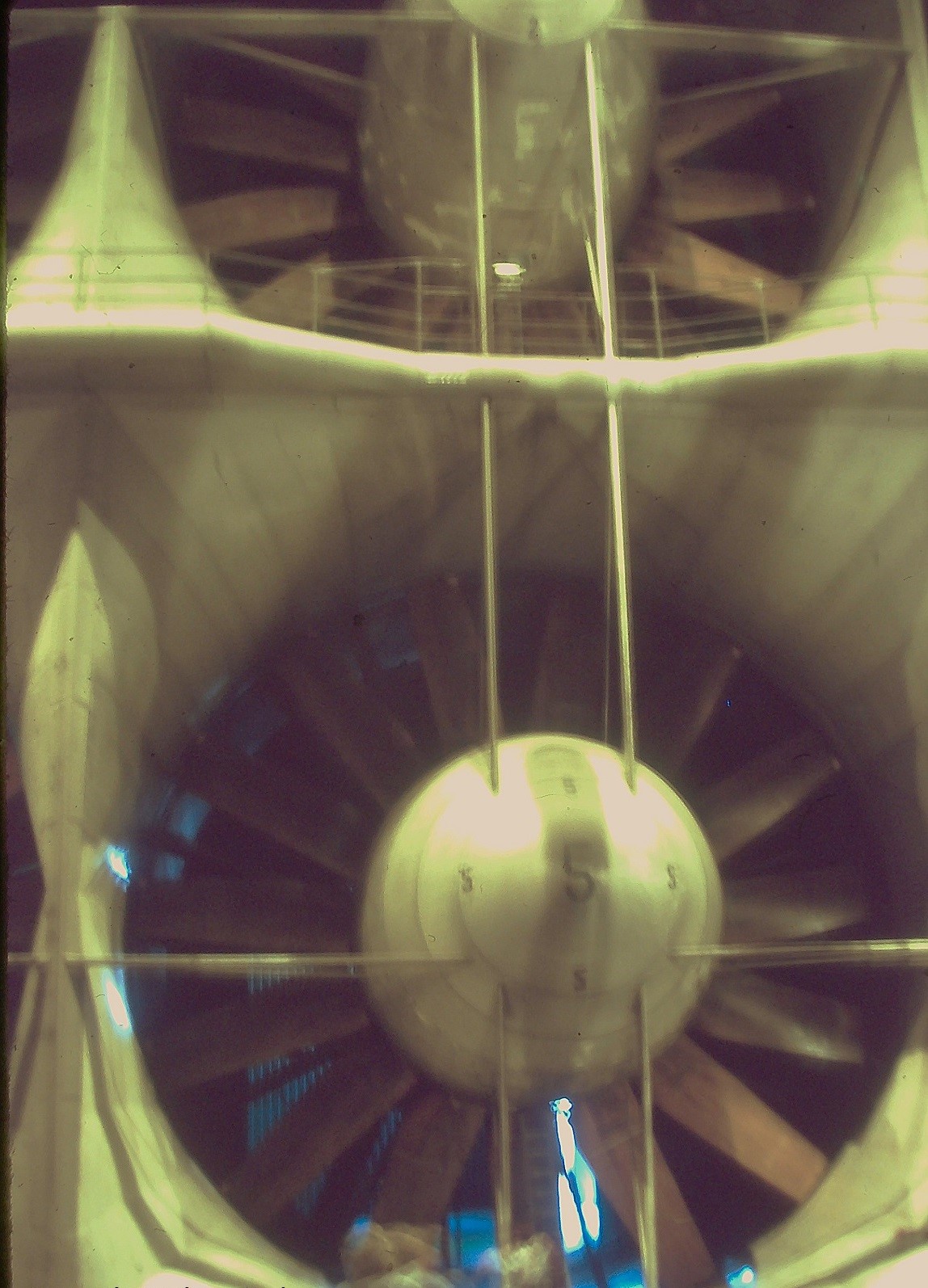
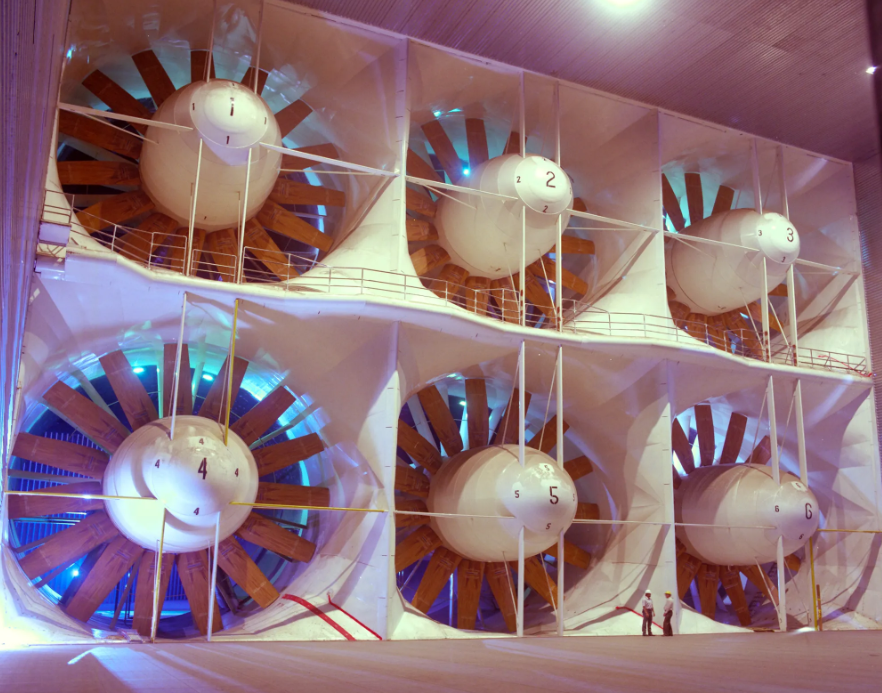
Pictured above, was our small group, touring the inside of the massive (80 x 120) ft Wind Tunnel. I obviously asked to see the giant turbines that would create these large velocity winds. However, my comment was blown-off by the guide, (pardon the pun). So, I did a massive no, no! When our group left the chamber, I did a quick run down to the turbines to get the picture you see above. Unfortunately, this set off alarms, and I was accosted by the Military Police Officers. This is when I learned that the place was managed by the United States Airforce. I told them that I was just an innocent educator and the turbines was the most interesting part of the massive wind tunnels. By withholding that information, when your only a few meters away, was just mean. They agreed and let me go. But then they provided me with the better photo seen below. Now it is a public domain image and I would like to believe that I caused that.
My next tour was in the NASA Ames Exploration Center where I got the opportunity to do research in the science museum and education center. Additionally, there were displays and interactive exhibits to play with and NASA technology, missions and space explorations to learn about in 1996. {Note: I’m in the massive gyroscope pictured below}.
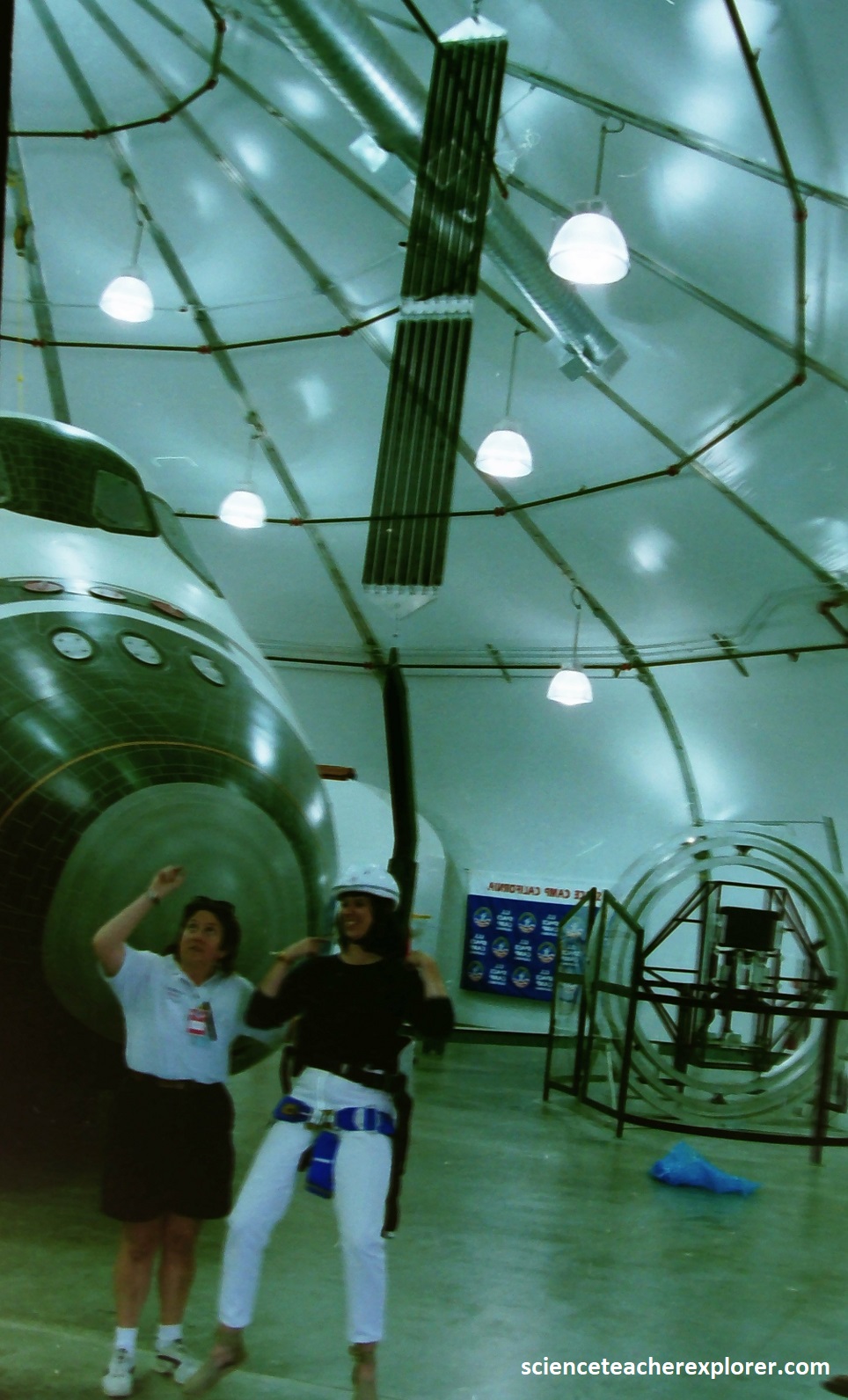
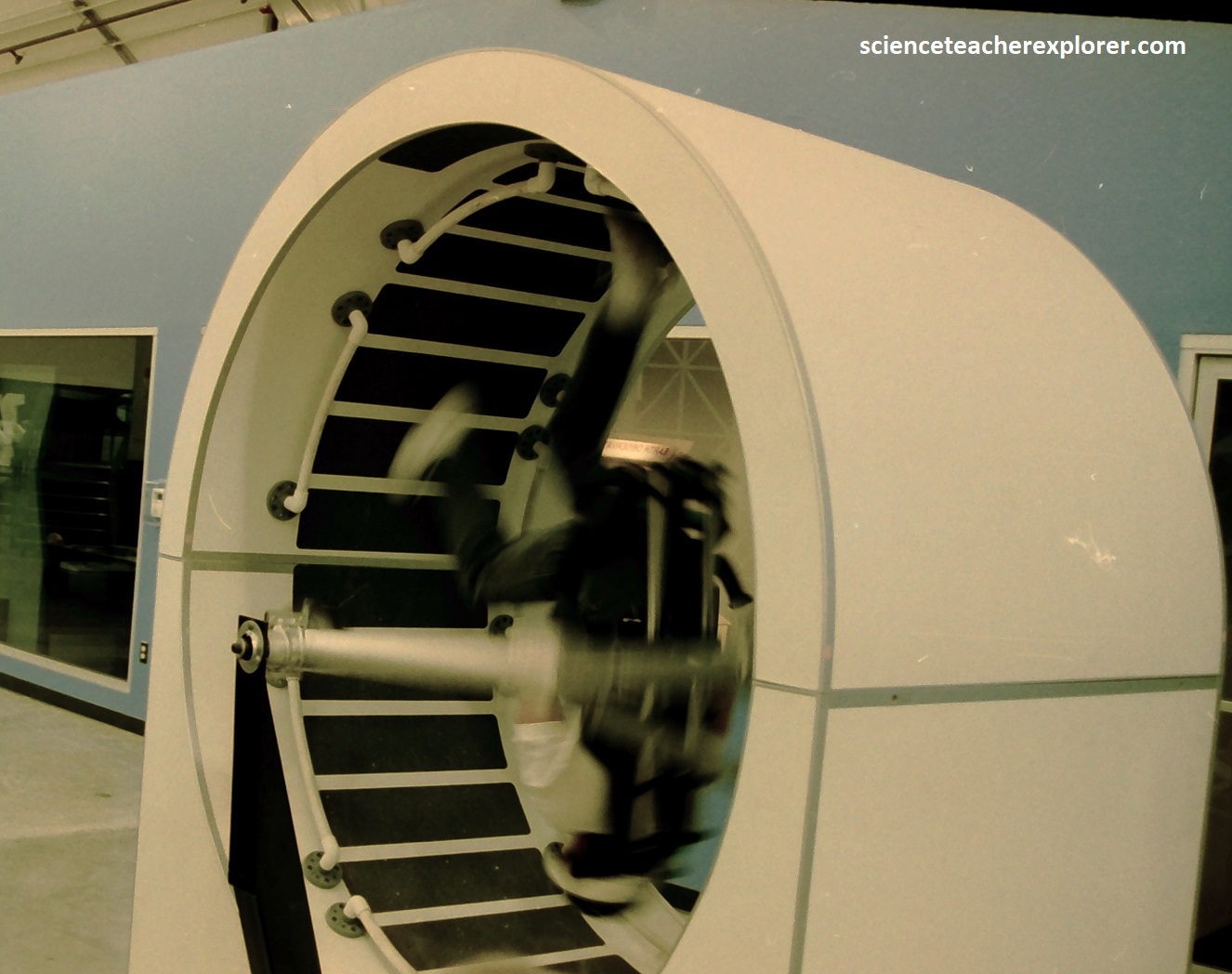
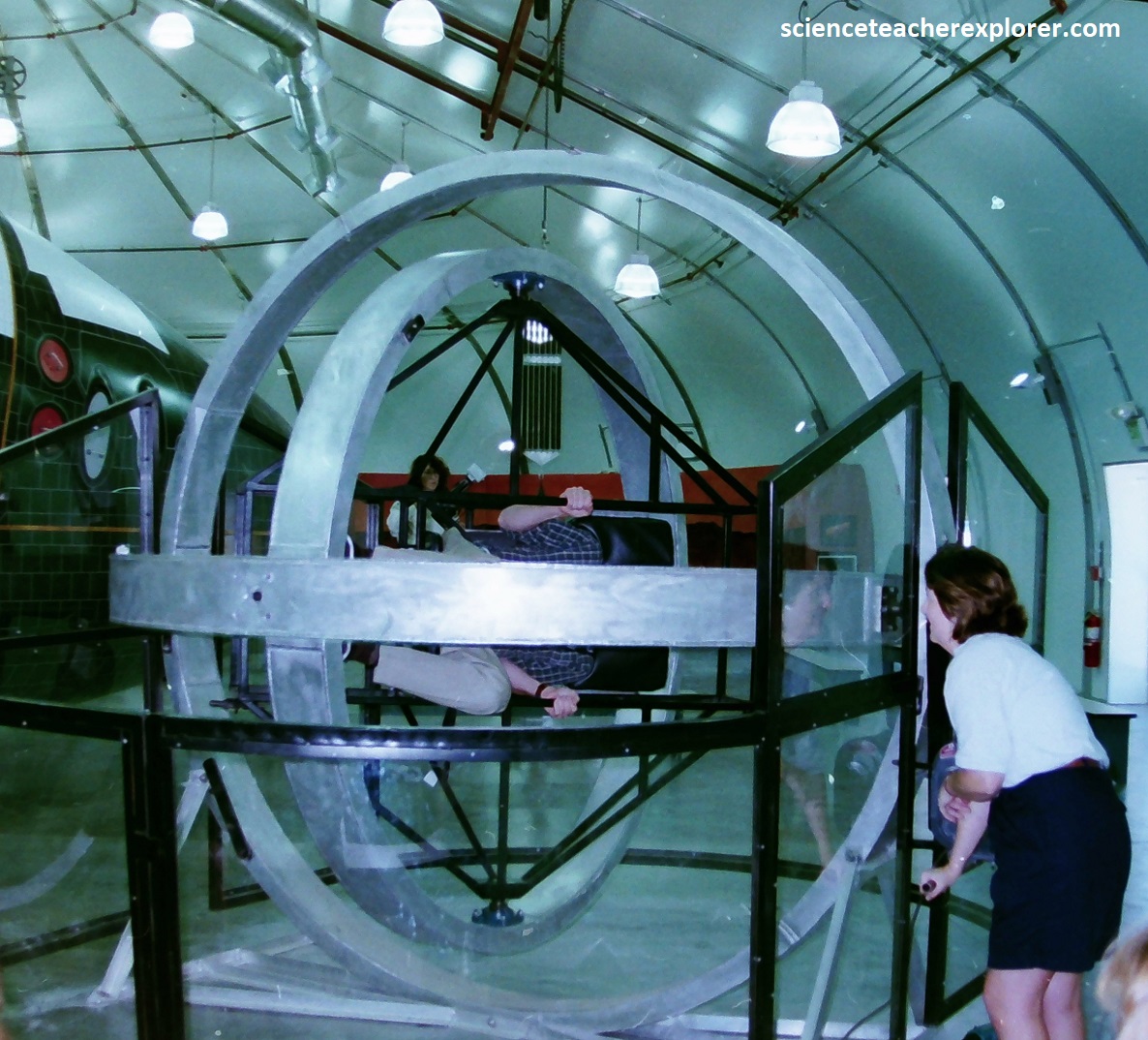
Pictured below is a g-force centrifuge simulator. This rotating machine creates artificial g-forces by rapidly accelerating and decelerating the rider. NASA uses centrifuges to train astronauts for the g-forces experienced during launch and reentry.
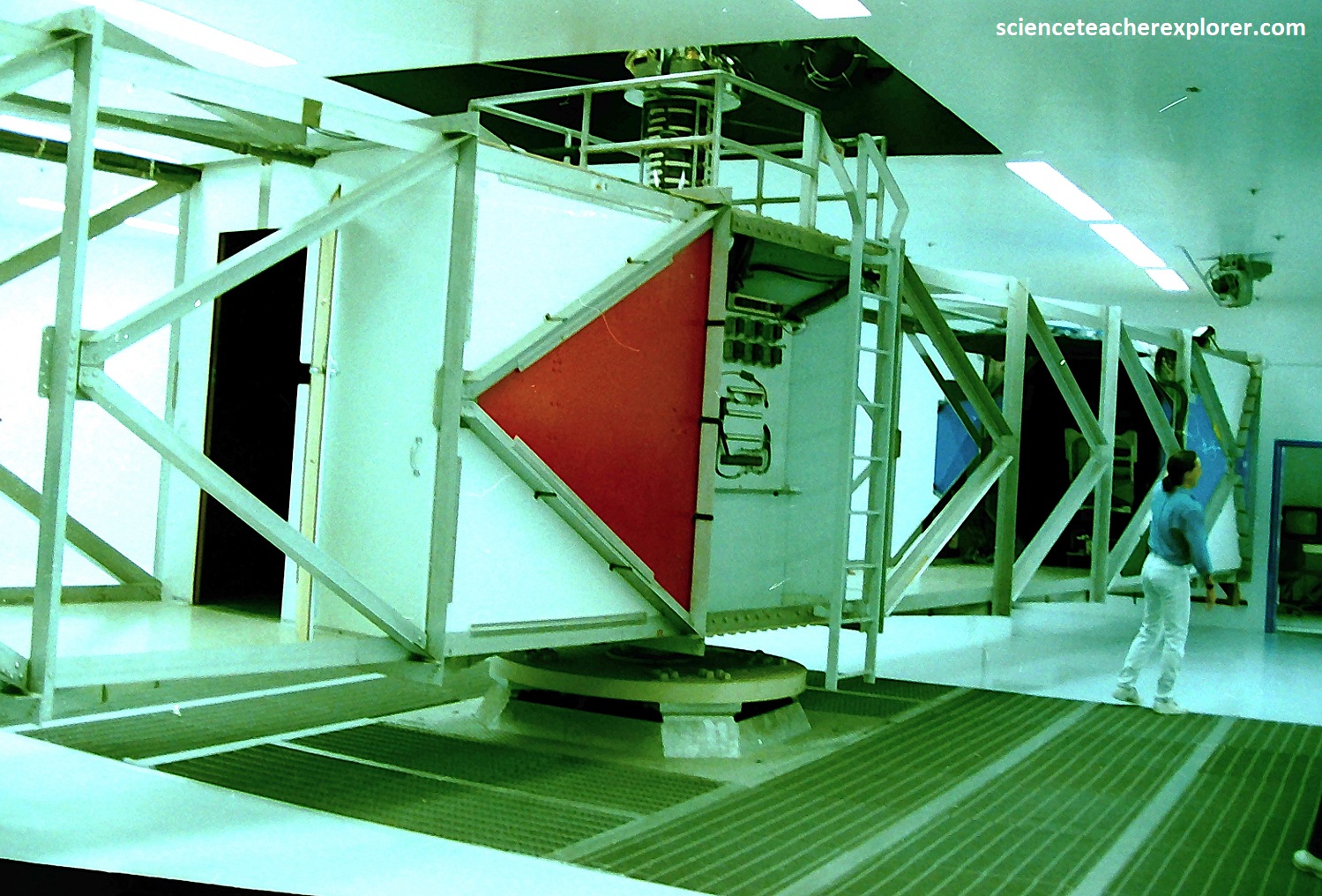
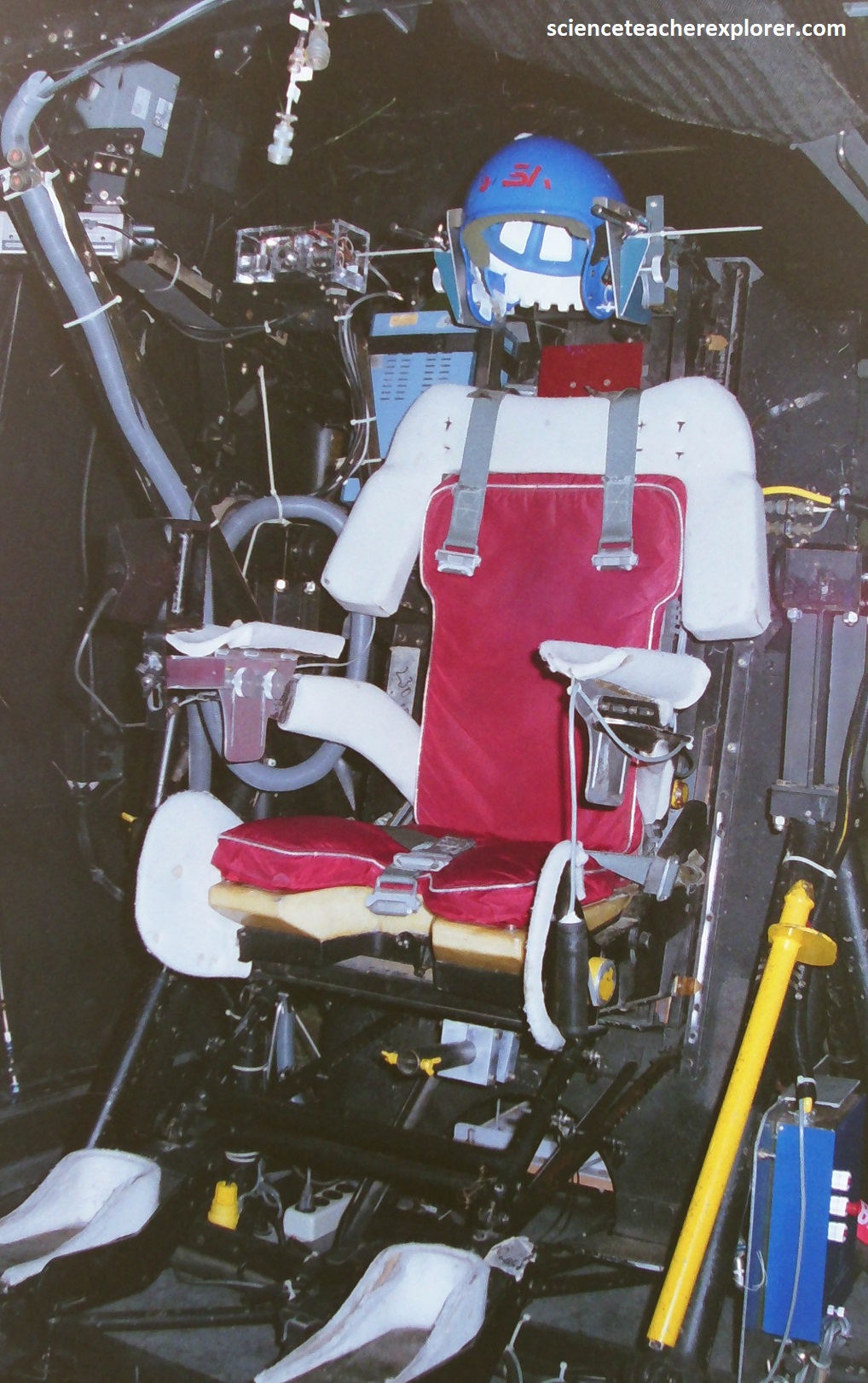
My next tour, was back out on Moffett Field to explore the modern Hangers, (pictured below).
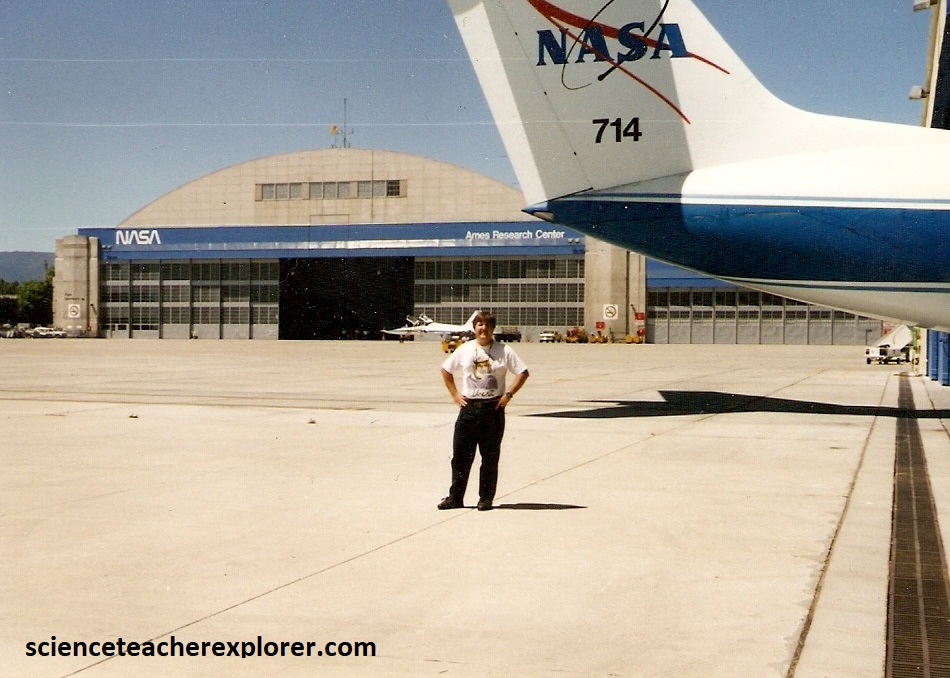
Within the Moffett Hangers, I met a NASA-pilot named Tim Williams. I then spent several days working with him for teaching-resources. Timothy L. Williams was a research test pilot at NASA’s Armstrong Flight Research Center in Edwards, California. He flew airborne science and test aircraft and was a team member on test programs, supporting mission planning, procedures and safety-related operational elements. Additionally, he was the project pilot for NASA’s ER-2 high-altitude science aircraft and the C-130 environmental science research aircraft missions. He had provided me with most of the photos below. {Images below were provided by Timothy L. Williams, NASA research pilot of the Ames Research Center for educational purposes in 1996}.
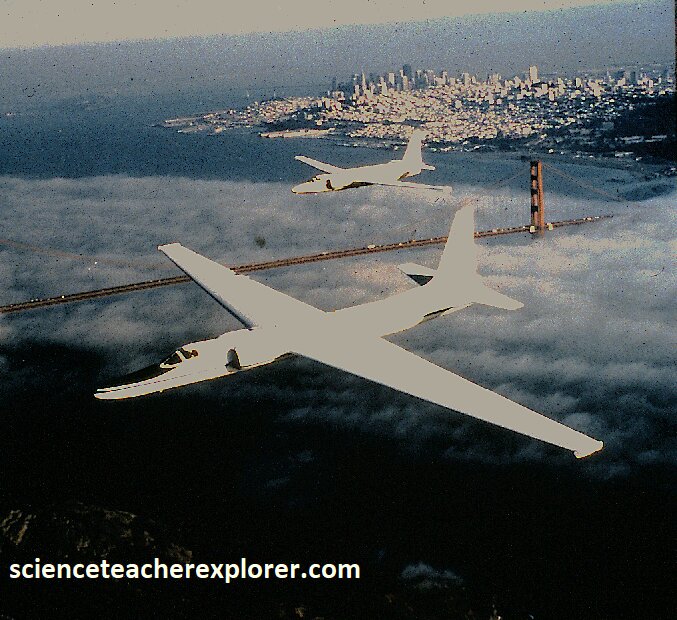
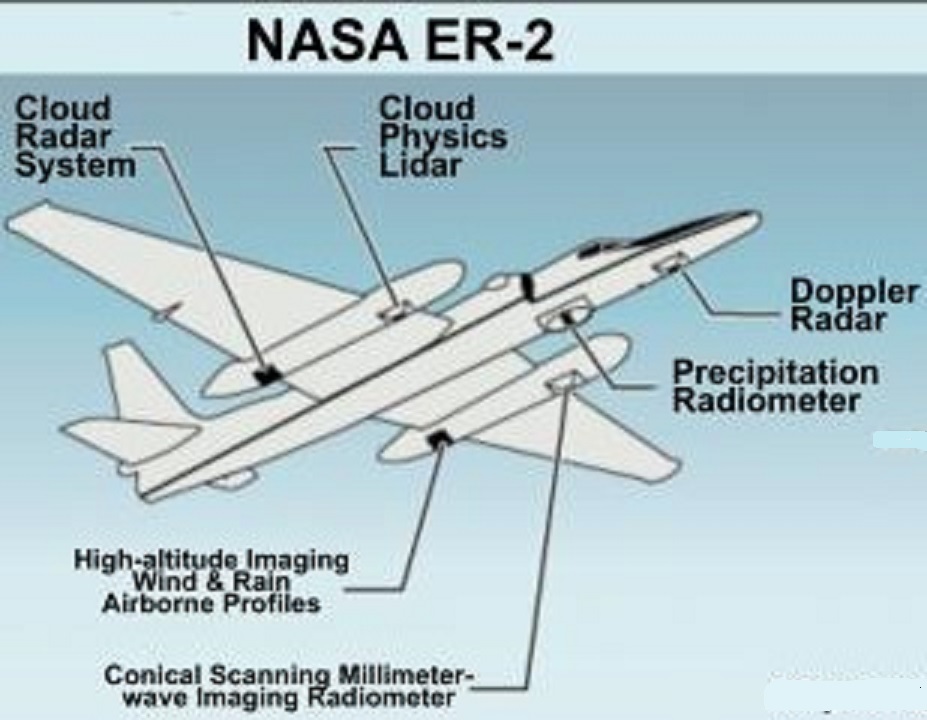
As mentioned, Mr. Williams was a NASA pilot that flew the ER-2 for high-altitude research-missions. The NASA ER-2 was converted from a CIA E-2 in the 1980s, (Pictured & imaged above). One of the first missions for NASA it accomplished; was to investigate the infamous ozone-hole over the Antarctica and collect data using Infrared images, (imaged below). {Images below of the Ozone Hole were provided by Timothy L. Williams, NASA research pilot of the Ames Research Center for educational purposes in 1996}. (Note the progression of size of the hole from 1979 to 1996).
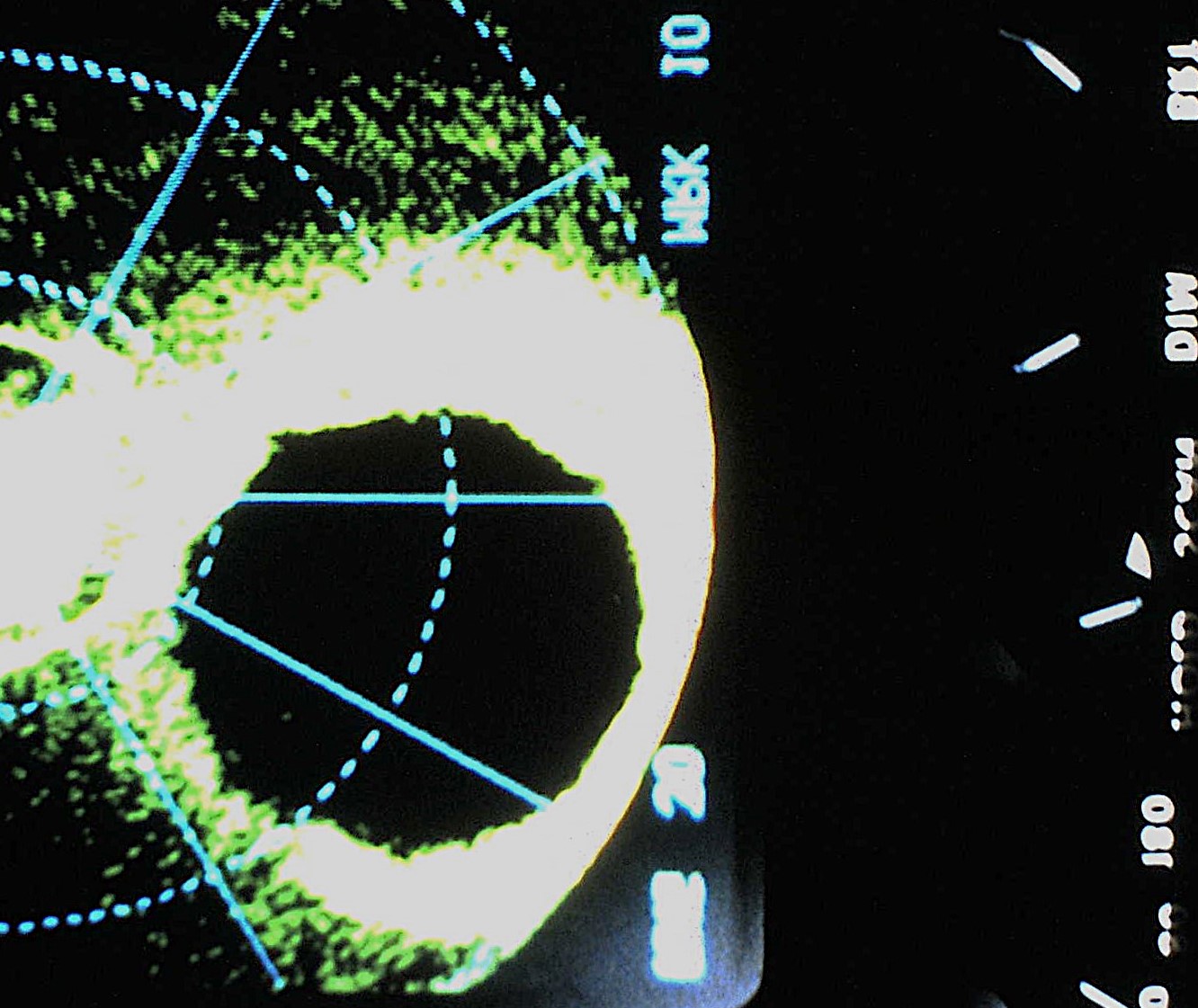
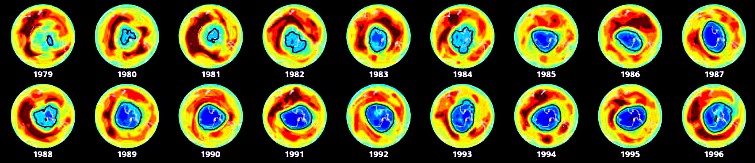
The Antarctic ozone hole is and area of seasonal ozone depltion in the stratosphere above the Antarctica, primarily occurring during the Antarctic spring (August-November). It’s not a literal hole, but rather a thinning of the ozone layer, allowing more harmful ultraviolet (UV) radiation to reach the surface rather than absorbing it and can be detected with the use of Infrared images. However, in the early 1980s, through a combination of ground-based and satellite measurements, scientists began to realize that Earth’s natural sunscreen was thinning dramatically over the entire earth and the Ozone Hole increasing in size was a warning that something was wrong. It was later concluded that man-made CFCs were the culprit and a international ban was implemented. {Images below were provided by Timothy L. Williams, NASA research pilot of the Ames Research Center for educational purposes in 1996}.
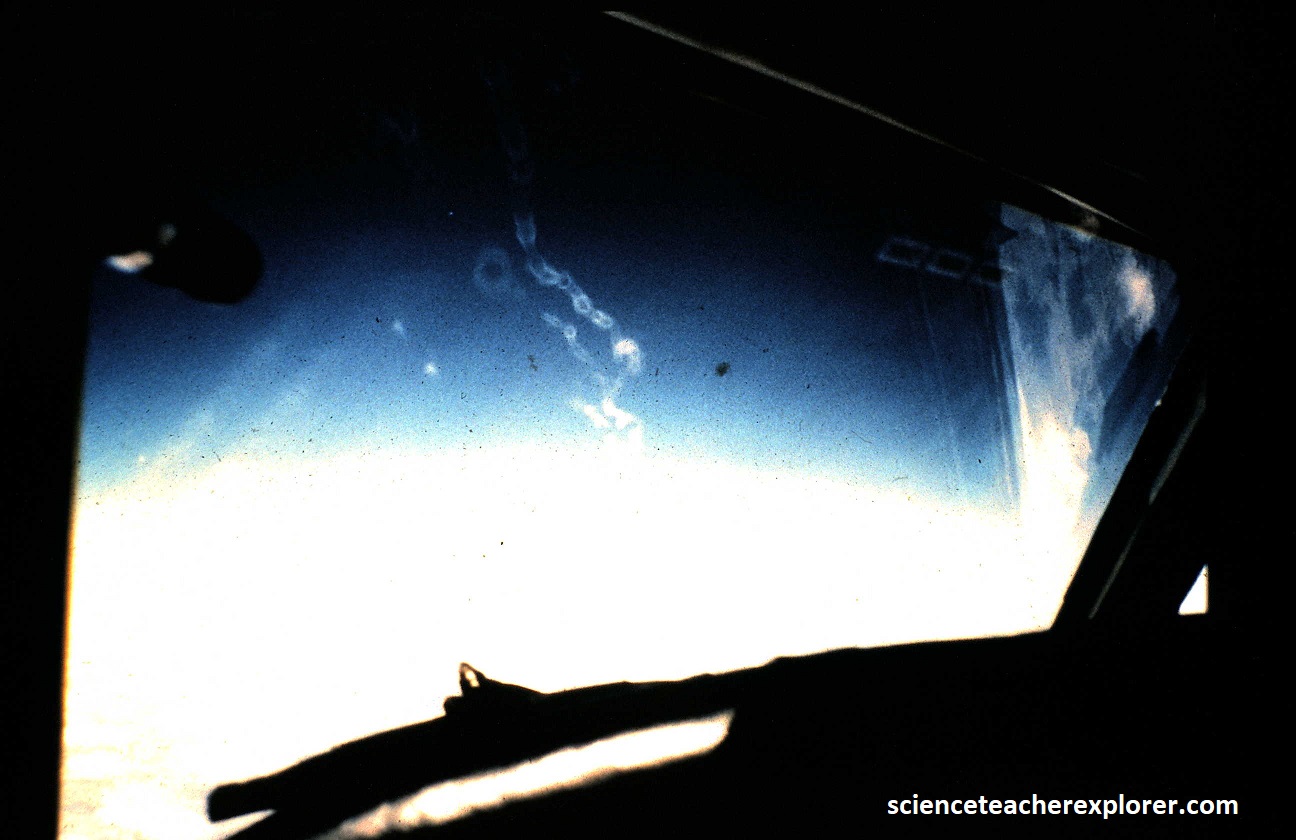
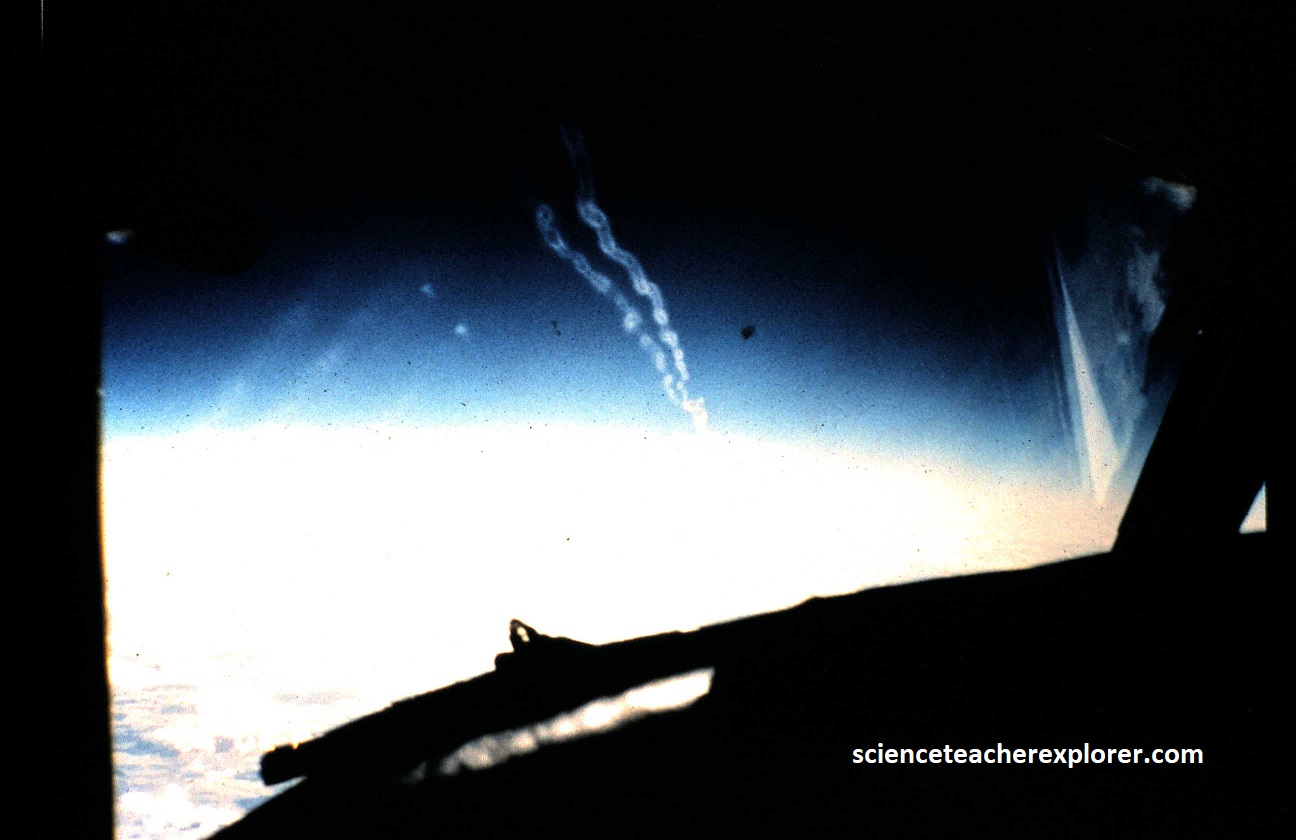
Another, investigation the NASA ER-2 was involved in was the measurement of the increase of contrails worldwide (pictured above). Contrails, or condensation trails, are the white streaks often seen behind airplanes, and they can contribute to global warming. These trails form when the water vapor on the surface of an aircraft or it’s exhaust condenses and freezes into ice crystals in the cold, humid air at high altitudes. While contrails are not directly a pollution in the traditional sense, they do affect the Earth’s climate by altering the amount of sunlight reaching the surface and by trapping heat & adding to global warming. {Images below were provided by Timothy L. Williams, NASA research pilot of the Ames Research Center for educational purposes in 1996}.
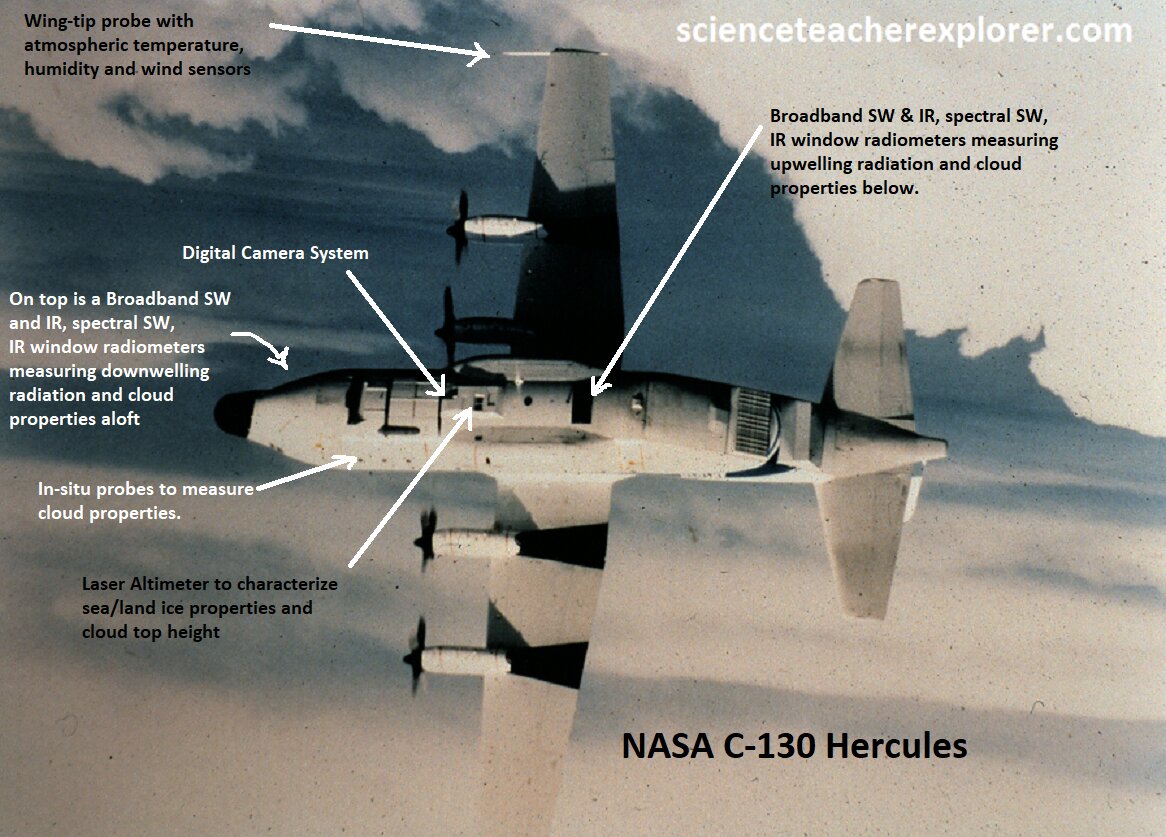
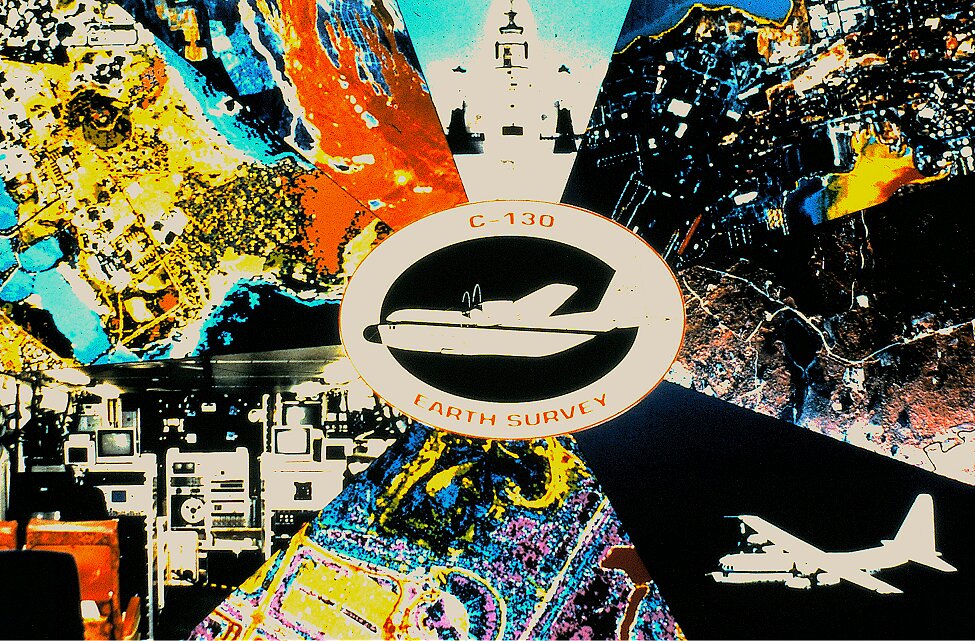
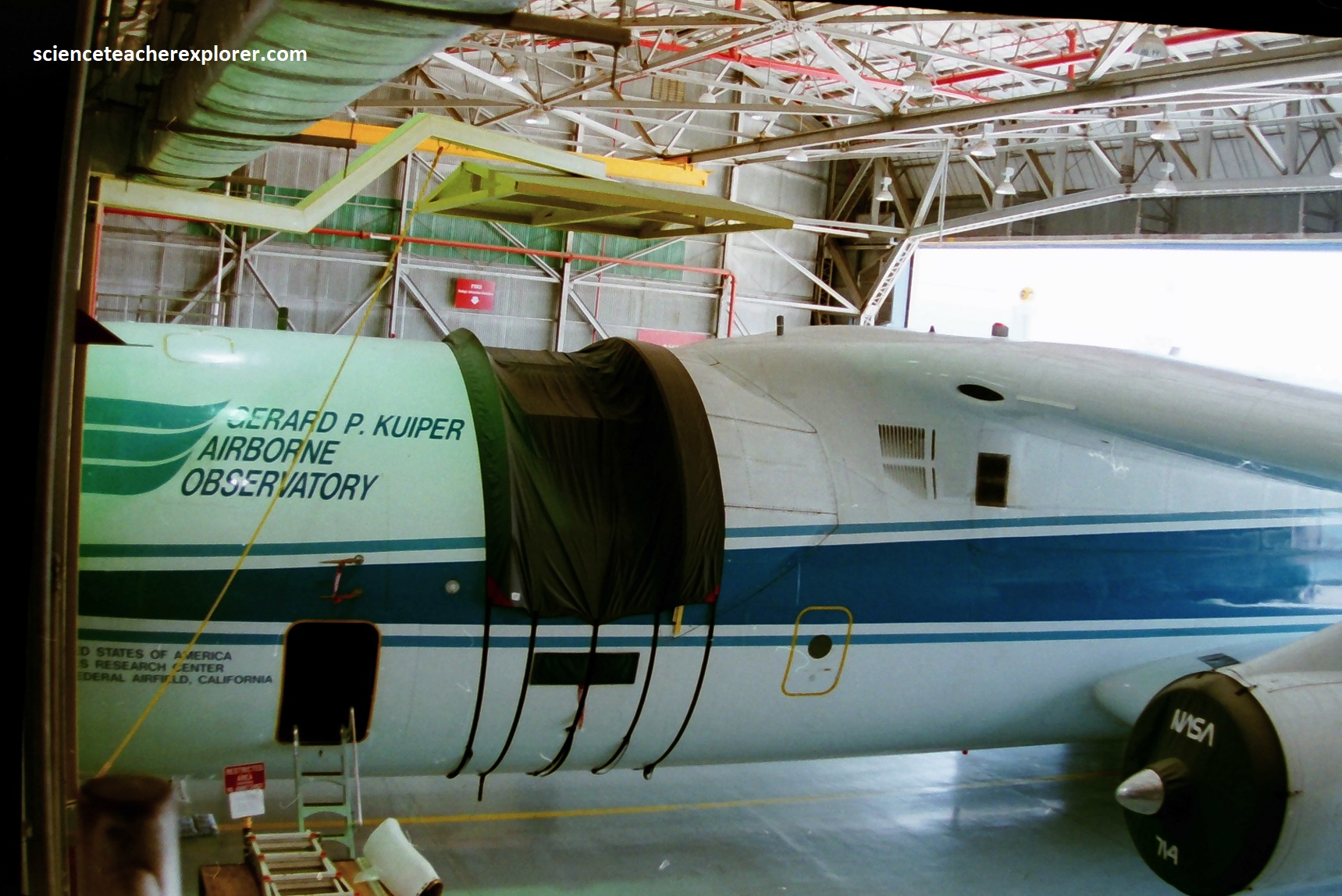
Another aircraft that Mr. Williams flew at the Ames Research Center was the NASA C-130. This Lockheed C-130 “Hercules” aircraft is a four-engine, medium-size utility aircraft that has proven to be one of the most well-known and versatile aircraft ever built. It performs a variety of research missions at altitudes below about 26,000 feet. With its excellent low altitude performance and heavy lift capabilities, the C-130 is ideal for studying the planetary boundary layer and lower to mid-tropospheric chemistry missions. In addition to NASAs standard thermodynamic, wind and turbulence, microphysics, radiation, and trace gas instruments, the C-130 has a roomy fuselage payload area that can accommodate many rack-mounted instruments with access to several inlets and optical ports. It also had the capabilities of having instruments pointed upwards toward the upper atmosphere. {Images below were provided by Timothy L. Williams, NASA research pilot of the Ames Research Center for educational purposes in 1996}.
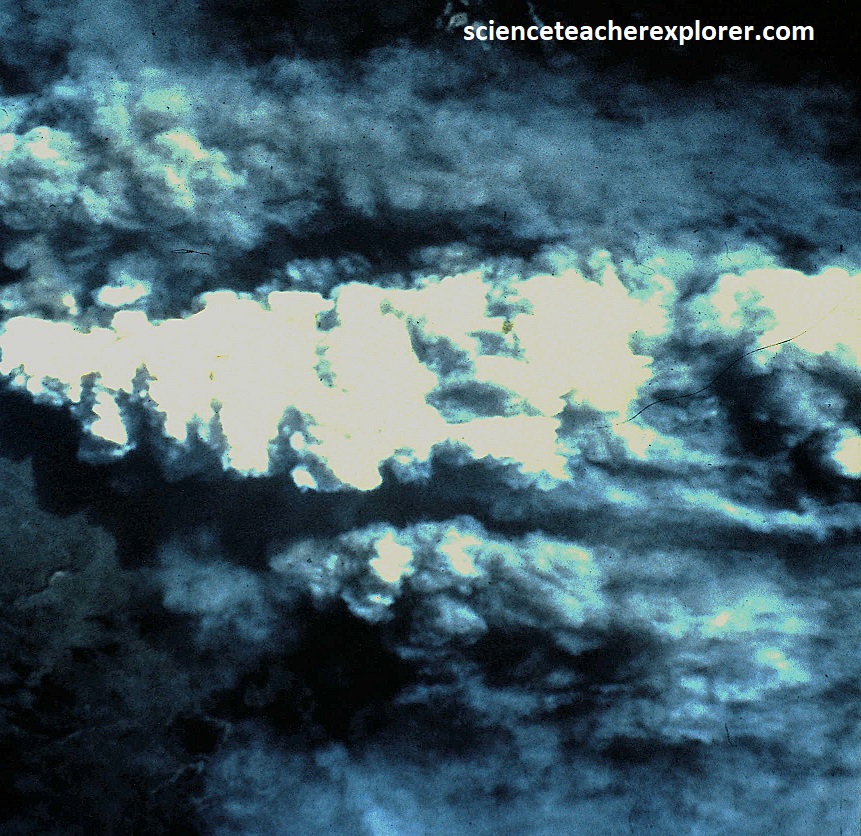
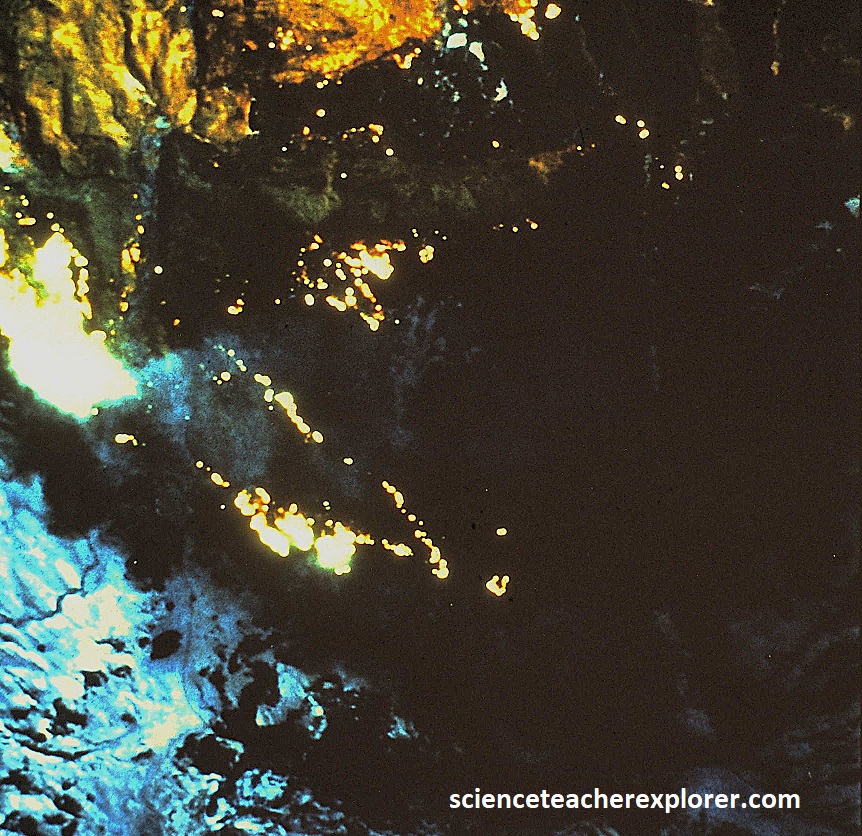
Pictured above are optical (left) and IR (right) photos of the infamous 1988 Yellowstone Fires. The IR-photos isolated the hotspots through the smoke for the fire-boss. . In June of 1988, Yellowstone National Park managers and fire behavior specialists allowed 18 lightning-caused fires to burn. However, the fires had gotten out of control by July. Eventually, 36% (793,880 acres) of the park was affected. About 300 large mammals perished as a direct result of the fires: 246 elk, 9 bison, 4 mule deer, 2 moose. $120 million spent fighting the fires. Total of 10,000 people involved in these efforts. The 1988 fires comprised the largest fire fighting effort in the United States at that time.
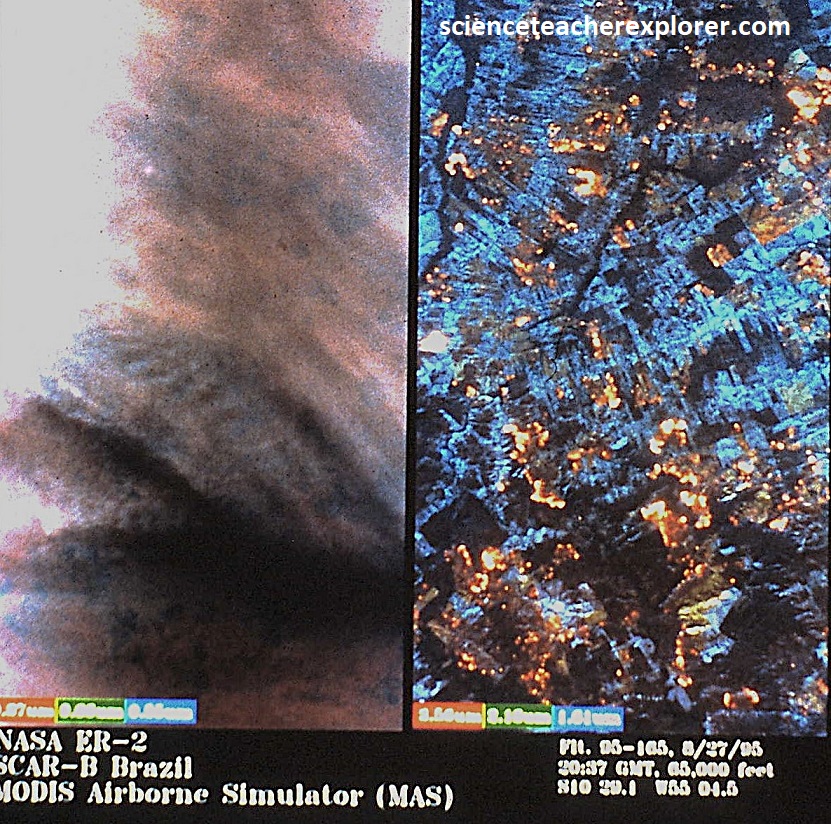
Pictured above, slash-and-burn agriculture, where land is cleared for crops and livestock by cutting down and burning vegetation, is a significant cause of deforestation and fires in the Brazilian Amazon. These fires release large amounts of carbon and other pollutants into the atmosphere, impacting the climate and air quality world-wide. The practice is often used by government soldiers, farmers and ranchers who are clearing land for agriculture or cattle ranching. {Images below were provided by Timothy L. Williams, NASA research pilot of the Ames Research Center for educational purposes in 1996}.
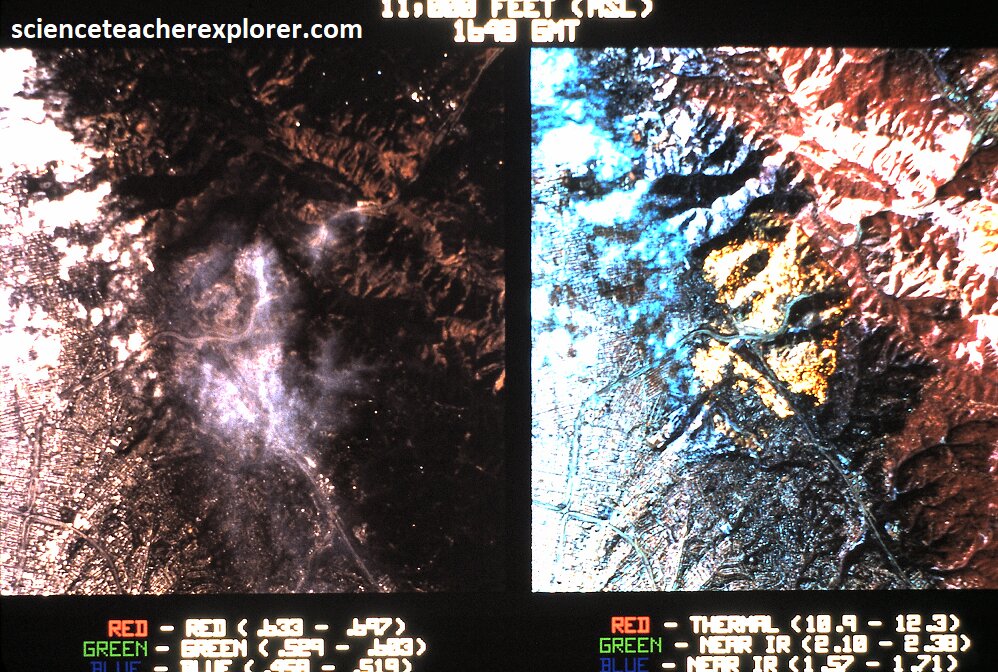
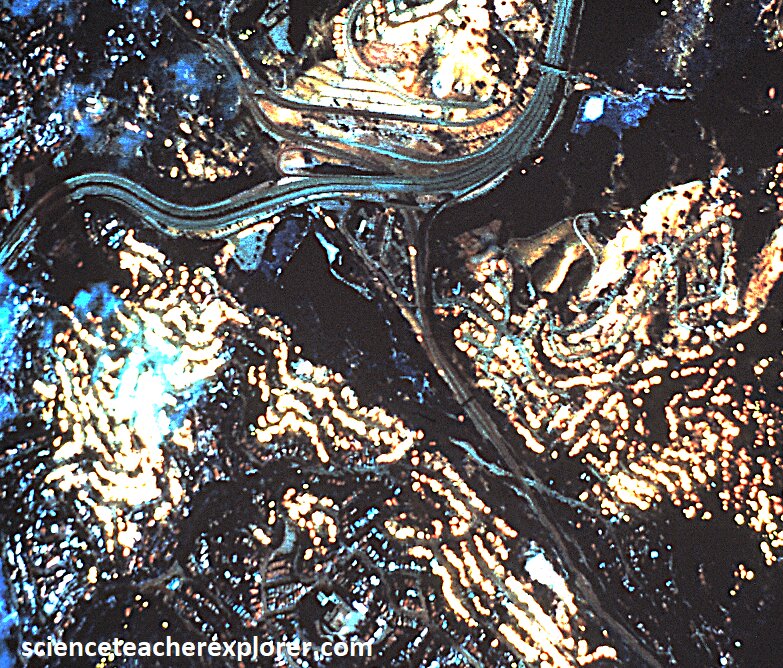
Pictured above, is the optical (left) & infrared (middle & right) photos of the the Oakland firestorm of 1991, also known as the Tunnel Fire. This disaster was a large suburban wildland-urban conflagration that occurred on the hillsides of northern northern Oakland, California, and southeastern Berkeley. The fire ultimately killed 25 people and injured 150 others. The 1,520 acres (620 ha) destroyed included 2,843 single-family dwellings and 437 apartment and condominium units. {Note the above photo on the right shows each individual structure lit-up with bright yellow on the IR-photo. The economic loss from the fire was estimated at $1.5 billion. {Images below were provided by Timothy L. Williams, NASA research pilot of the Ames Research Center for educational purposes in 1996}.
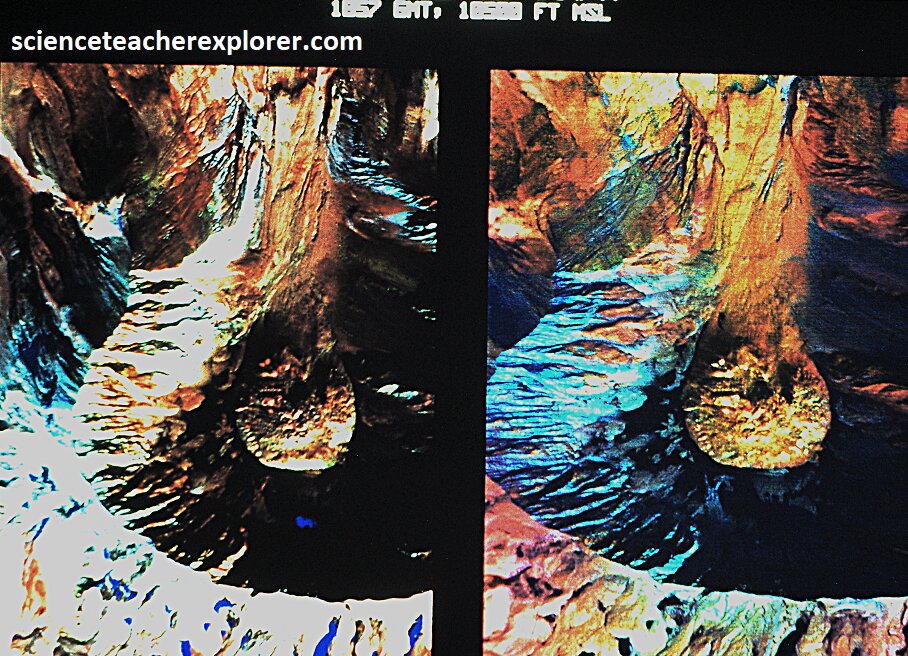
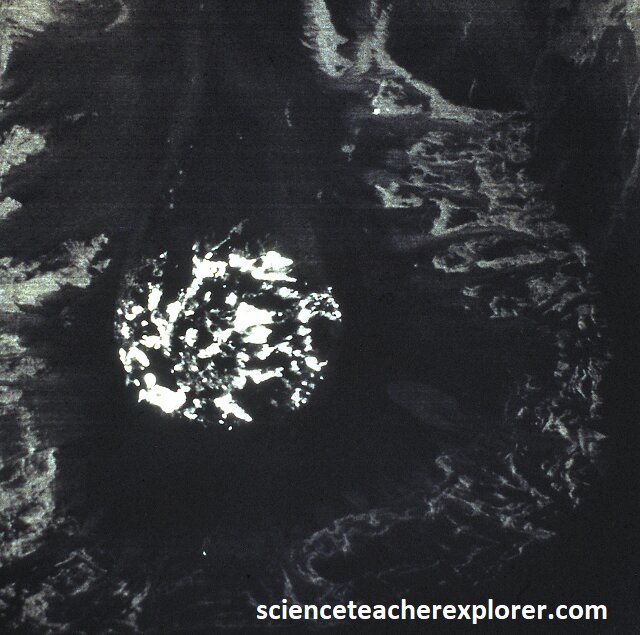
Pictured above, are the variety of the IR-thermo-images of the Mount St. Helens volcano in 1995. Note that the image on the above-right shows the hot-spots within the crater. Mount St. Helens volcano lies 83 km northeast of Portland, Oregon; and 158 km south of Seattle. It erupted in 1980 and remains the deadliest and most economically destructive volcanic event in U.S. history. 57 people were killed; 200 homes, 47 bridges, 24 km of railways, and 298 km of highway were destroyed. A massive debris avalanche, triggered by a 5.1 magnitude earthquake and caused a lateral eruption that reduced the elevation of the mountain’s summit from 2,950 to 2,549 m, leaving a 1.6 km wide horseshoe-shaped crater, (pictured above). The debris avalanche was 2.5 km3 in volume. {Images below were provided by Timothy L. Williams, NASA research pilot of the Ames Research Center for educational purposes in 1996}.
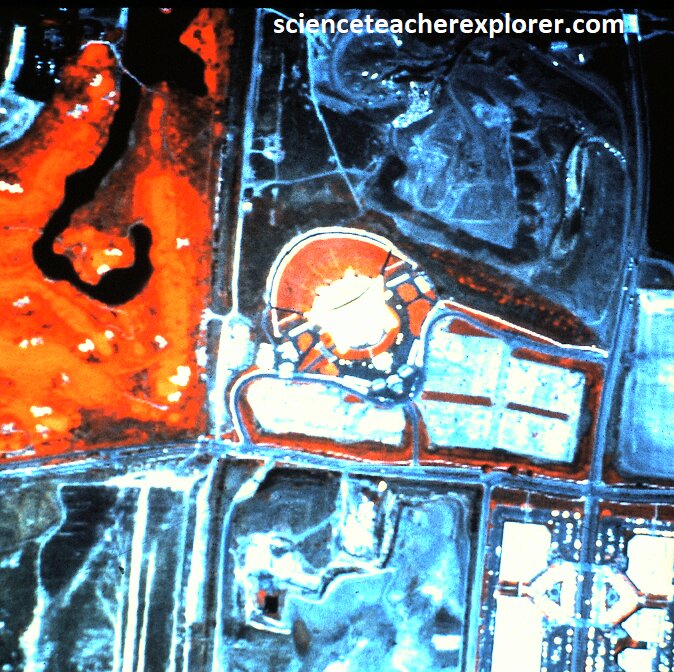
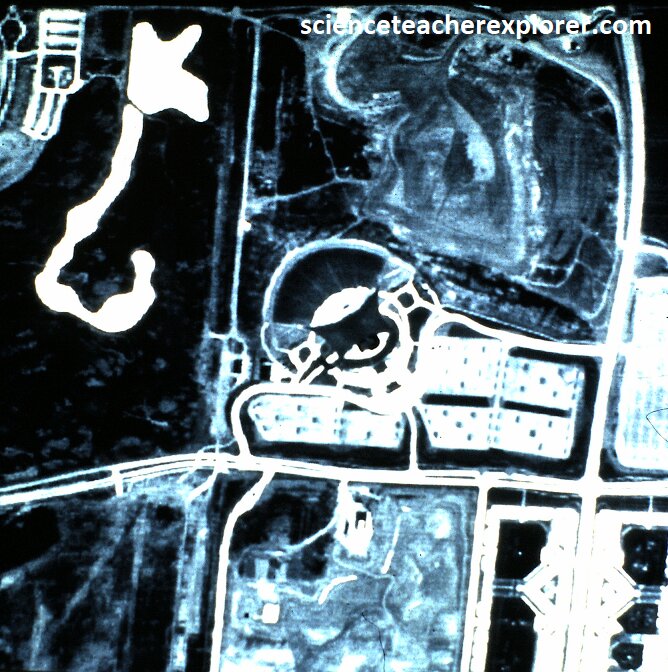
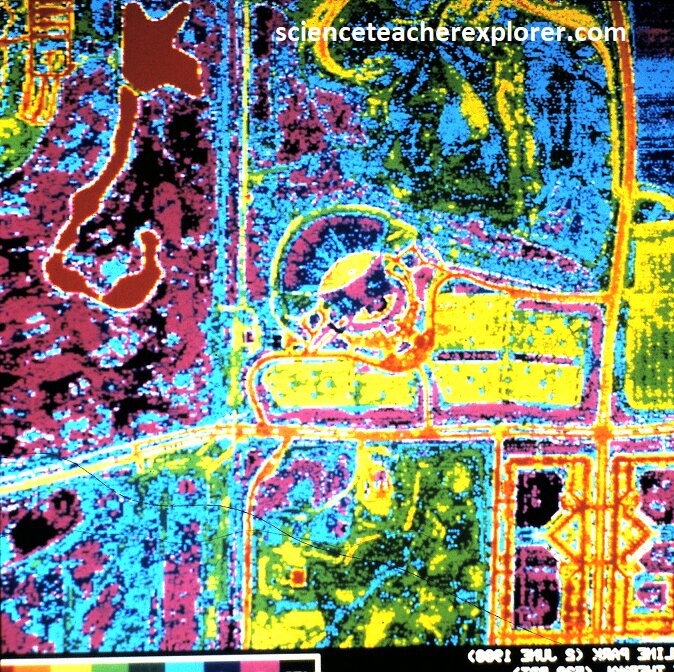
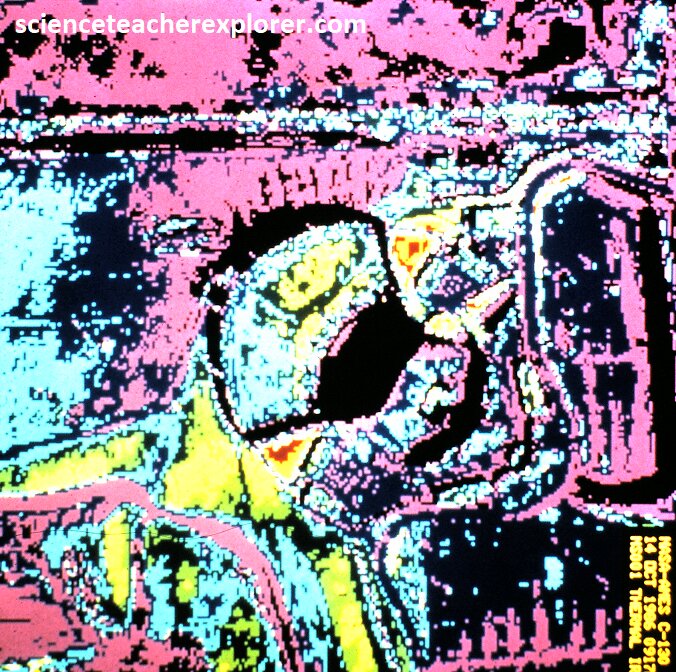
Pictured above, are the Optical Negative (black & white), and the IR-Thermal images of Candlestick-Park Stadium in San Francisco. We use the term of “images” to indicate the different infrared wavelengths (long & short IR) by assigning each a different color. The last image indicates that half of stadium emits a different wavelength than the other half. It was actually indicating an infra-red wavelength that matched the chemical signature of methane, (yellow). After a little historical research, Candlestick Park stadium was built on an old pig-farm. The methane was probably a remnant chemical-signature of it’s past pollution. This could answer questions about head-aches or health issues while watching a ball-game within the stadium. {Images below were provided by Timothy L. Williams, NASA research pilot of the Ames Research Center for educational purposes in 1996}.
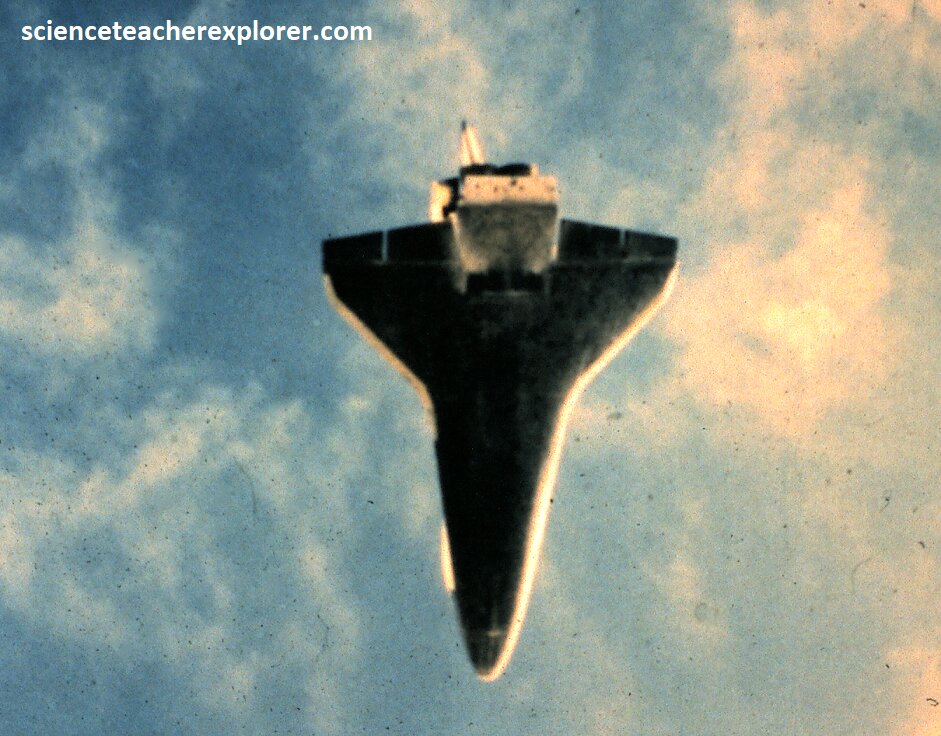
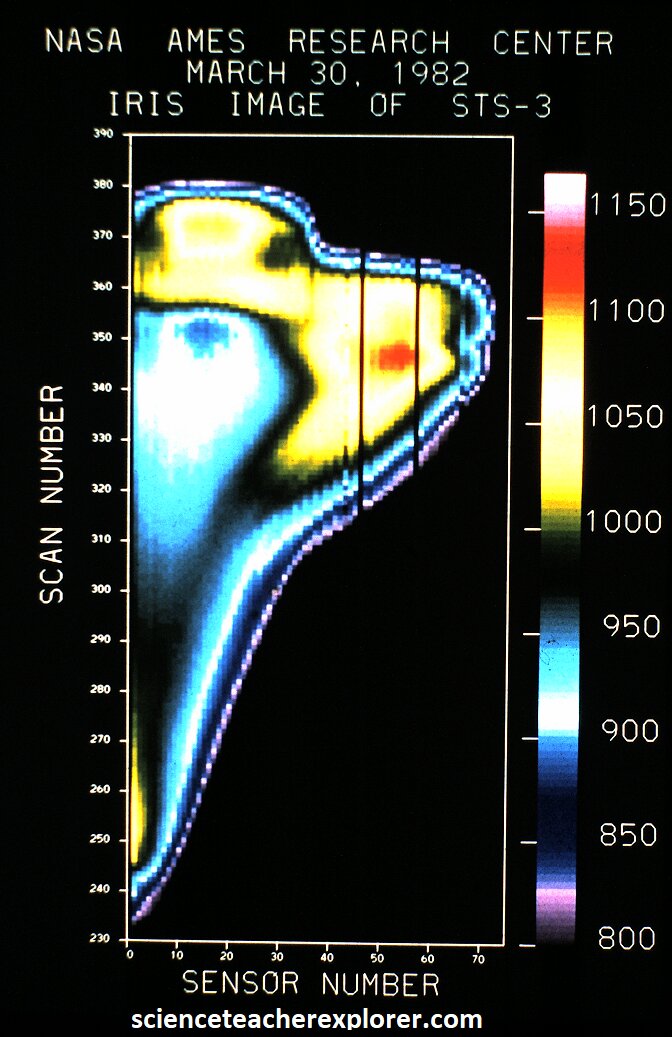
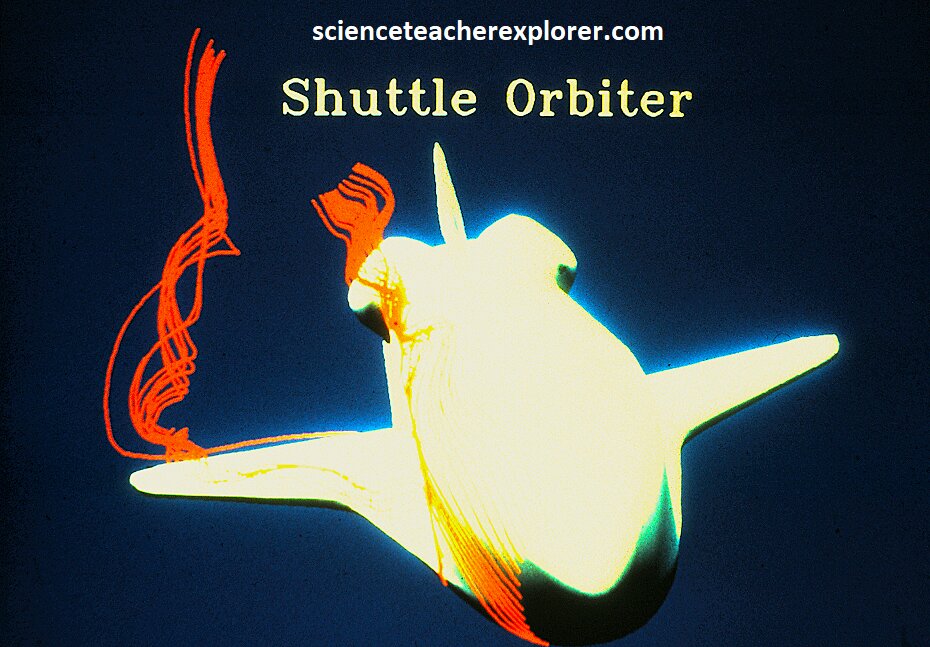
Pictured above, are optical (left) and IR-thermal photos of the NASA Columbia Space-Shuttle entering the atmosphere after the STS-3 mission in 1982. The STS-3 mission focused on orbital endurance testing and deploying scientific payloads, including a Canadian-built Remote Manipulator System (RMS) arm. Notice in the IR-thermal photo shows a hot-spot over the center point of the left wing. The wind-tunnel computational-analysis at Ames Research Center shows the correlating connection with a turbulent zone behind the wing and the hot-spot, (pictured above on the right). I asked Mr. Williams if this would be a problem if NASA ever lost a heat-shielding during take-off. He responded that this is exactly what happened during a 1988 top-secret mission for the Atlantis shuttle, (they damaged 700 heat-shield tiles and lost one completely when releasing the booster rockets during take-off). The Astronauts were lucky to make it back! However, when the Columbia lost it’s heat shields on it’s left wing during take-off in 2003, I wasn’t surprised when they didn’t make it back. Apparently, it disintegrated as it re-entered the atmosphere over Texas and Louisiana, killing all 7 astronauts on board. This missing heat shield was on the shuttle’s left wing. {The “missing heat shield” was actually a hole in the Reinforced Carbon-Carbon (RCC) panel on the leading edge of the left wing}. Having the above photos and mentioning my concerns in 1996, made it a spooky & sad coincidence in 2003, after Columbia’s last mission. I was given one of the heat shield plates to use in my physics demonstrations with a propane torch.
{Images above were provided by the public domain source of the NASA Ames Research Center of California 1996}.
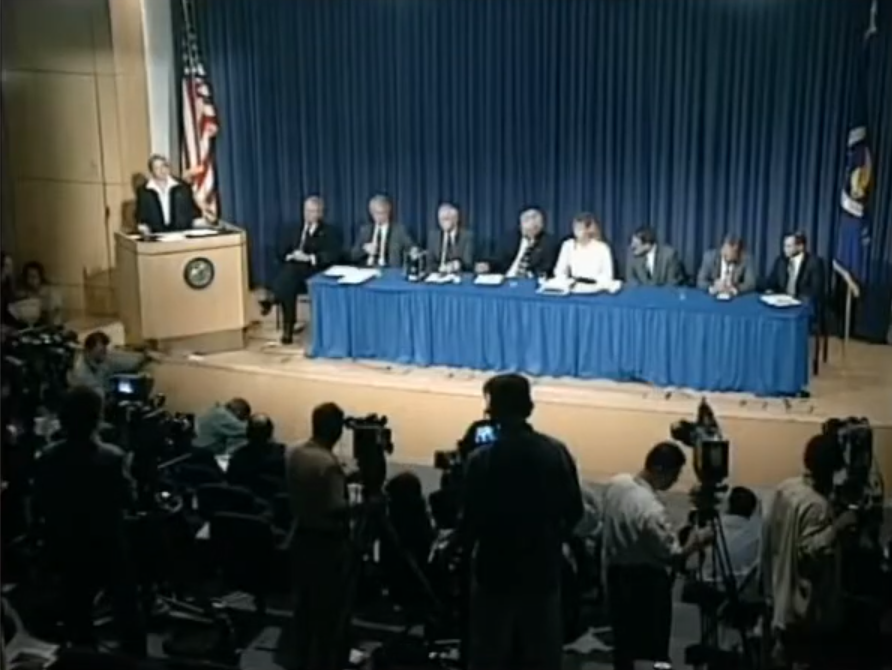
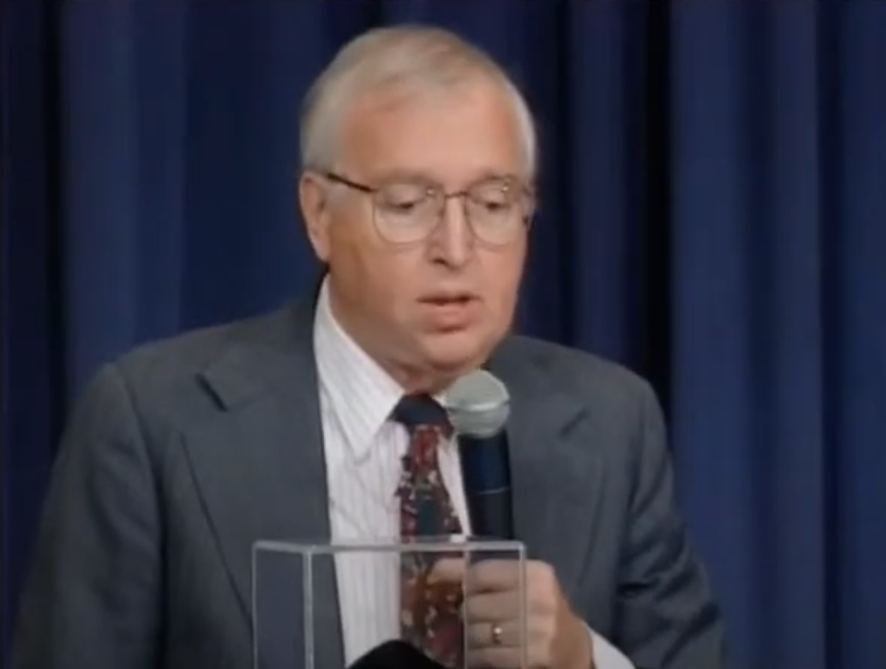
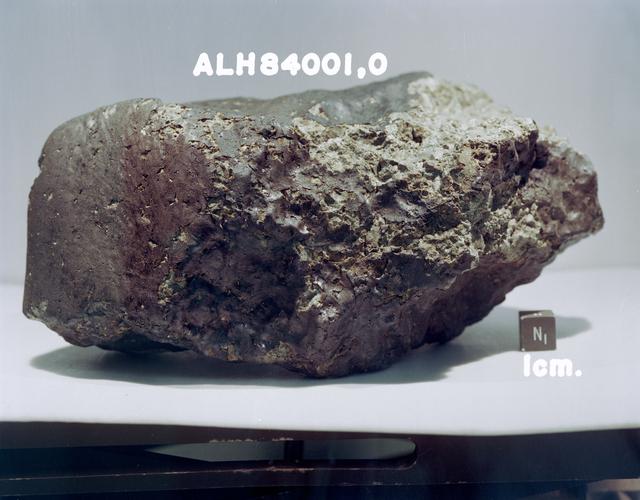
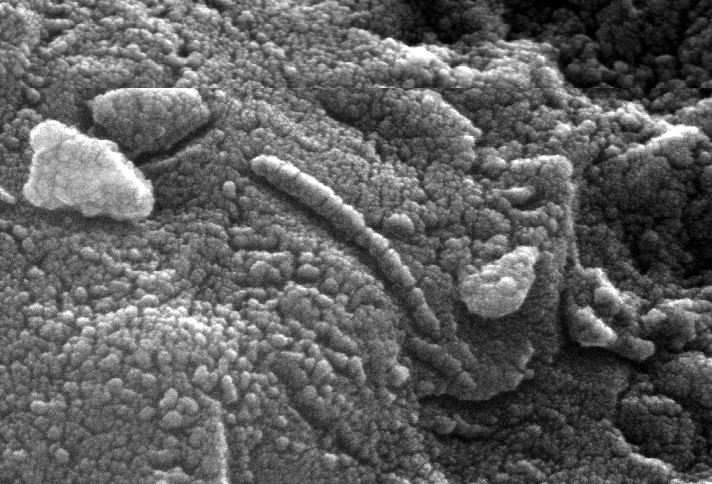
While completing my research-stay at Ames, I stayed in the dorms at Stanford University. I was encouraged to stroll over to the campus in the evenings to participate in a few scientific lectures. One lecture, was particularly eventful for me to mention. Apparently, Scientists of NASA and Stanford University had found evidence for fossil life in a Martian rock. This so-called “SNC meteorite” had been ejected into space by an asteroid impact on Mars about 15 million years ago, and travelled around the Sun on an elliptical orbit on its own, until it impacted in an Antarctic ice field about 13,000 years ago, where it was found in 1984. It was labelled “Allen Hills 84001”. What was discovered is complex organic compounds within the rock, so-called PAHs (“polycyclic aromatic hydrocarbons). Pictured above, the chemistry, mineralogy, and texture of these compounds and surrounding carbonates, collectively, point to a biological origin, and thus the conclusion that there is evidence for primitive life on Mars. The meeting was led by David S. Mckay of NASA, (also pictured above). This presentation, blew my mind! The room was packed with “News Media”.
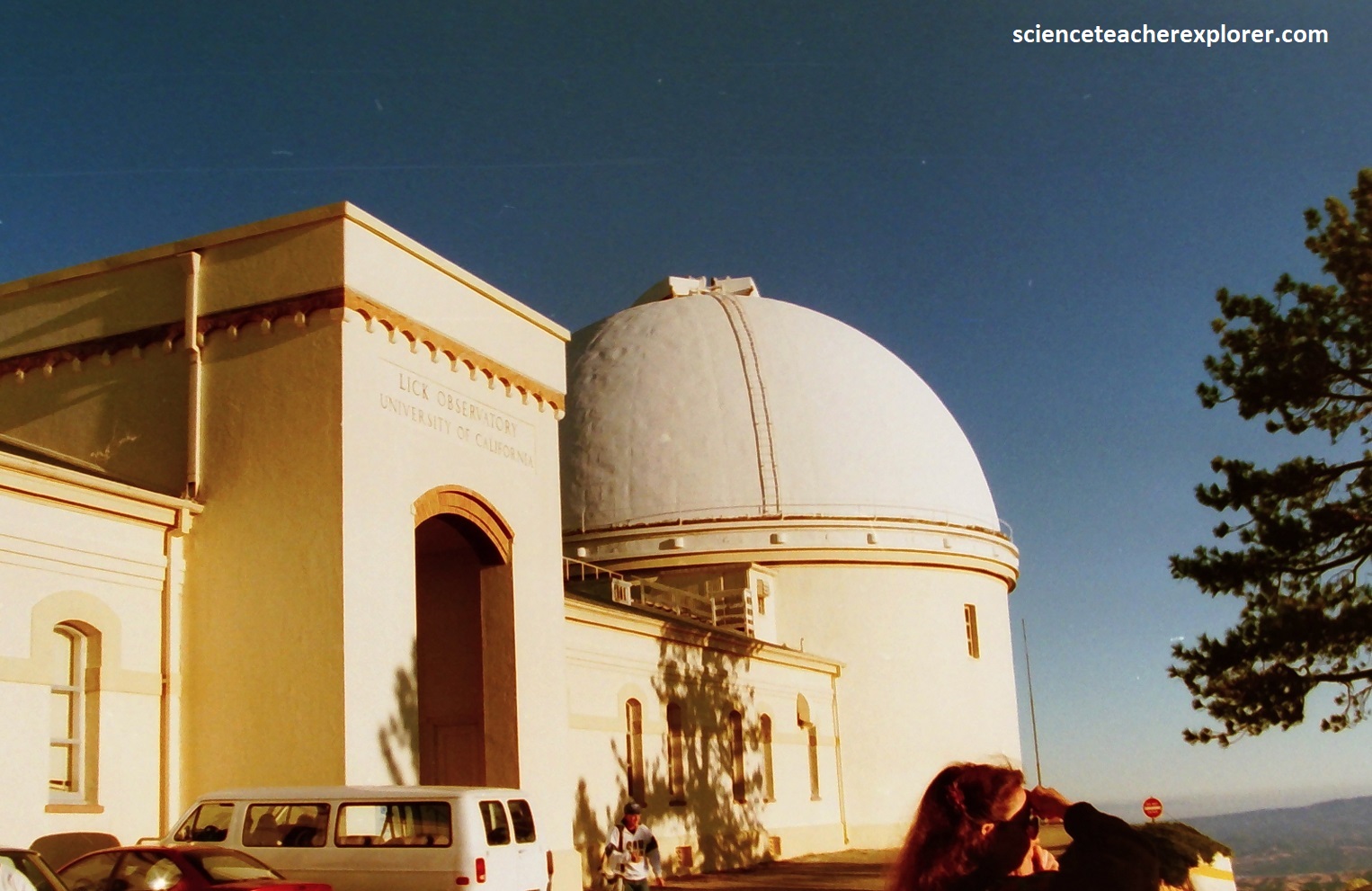
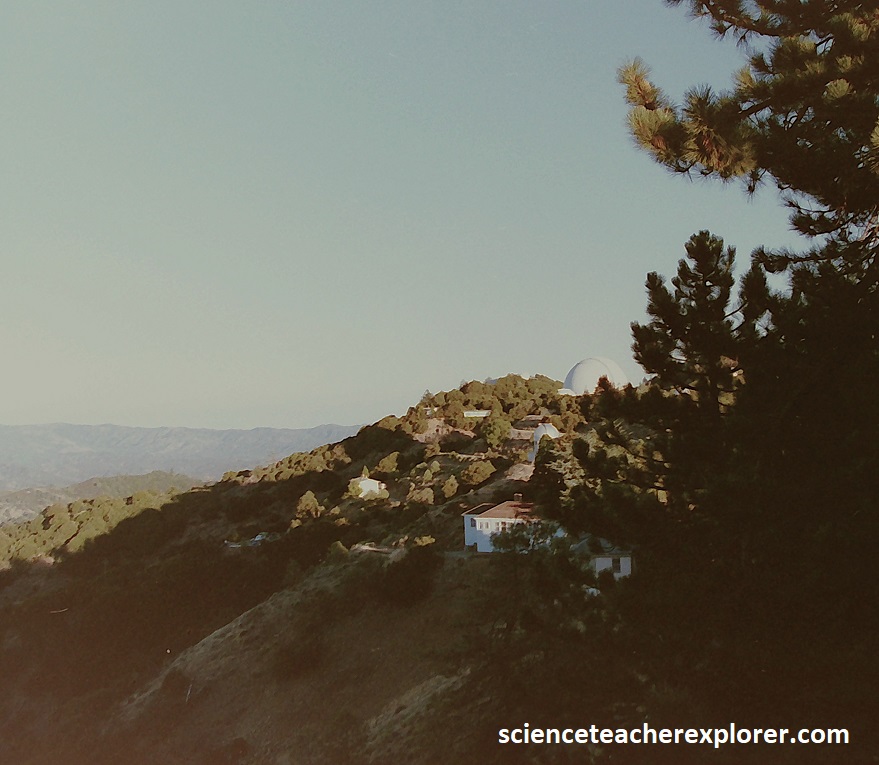
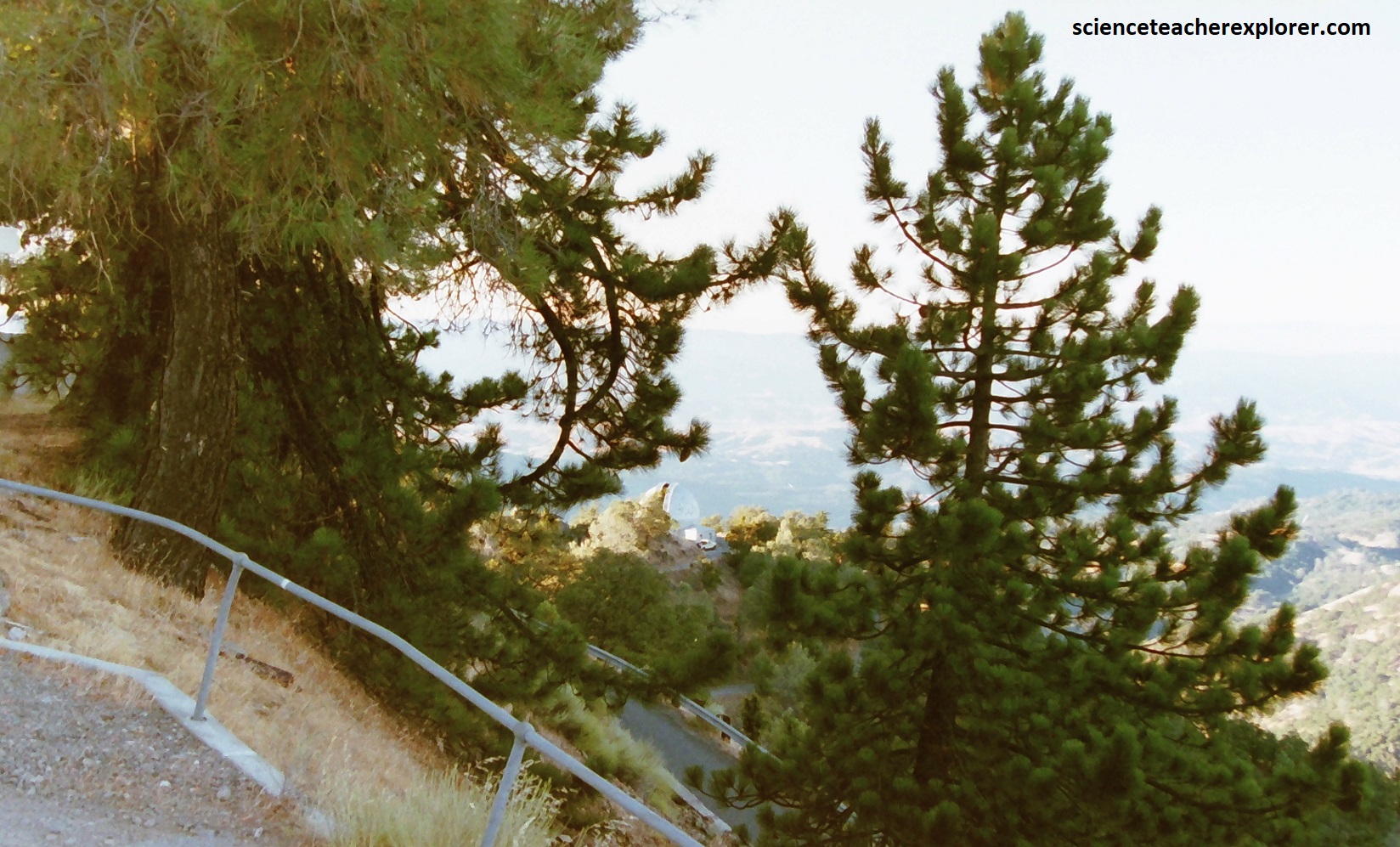
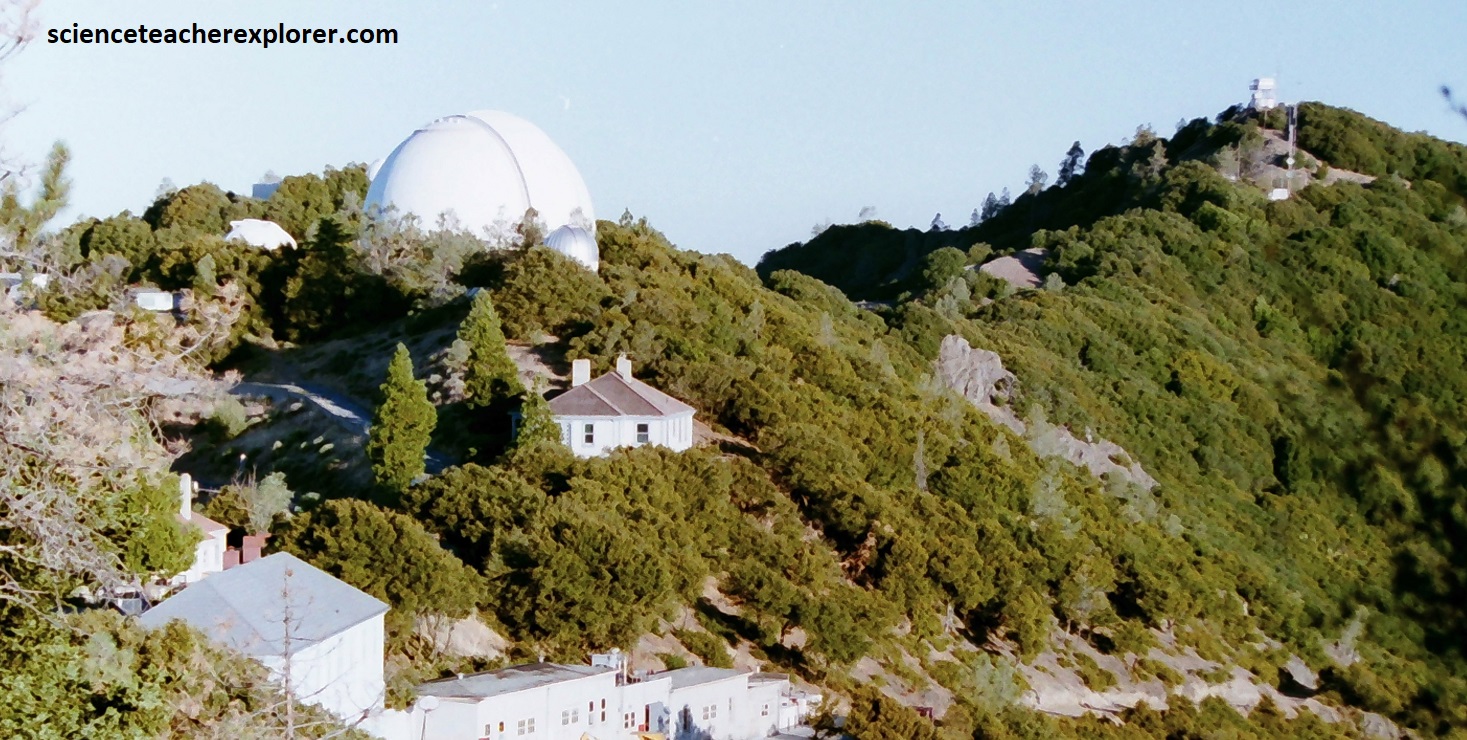
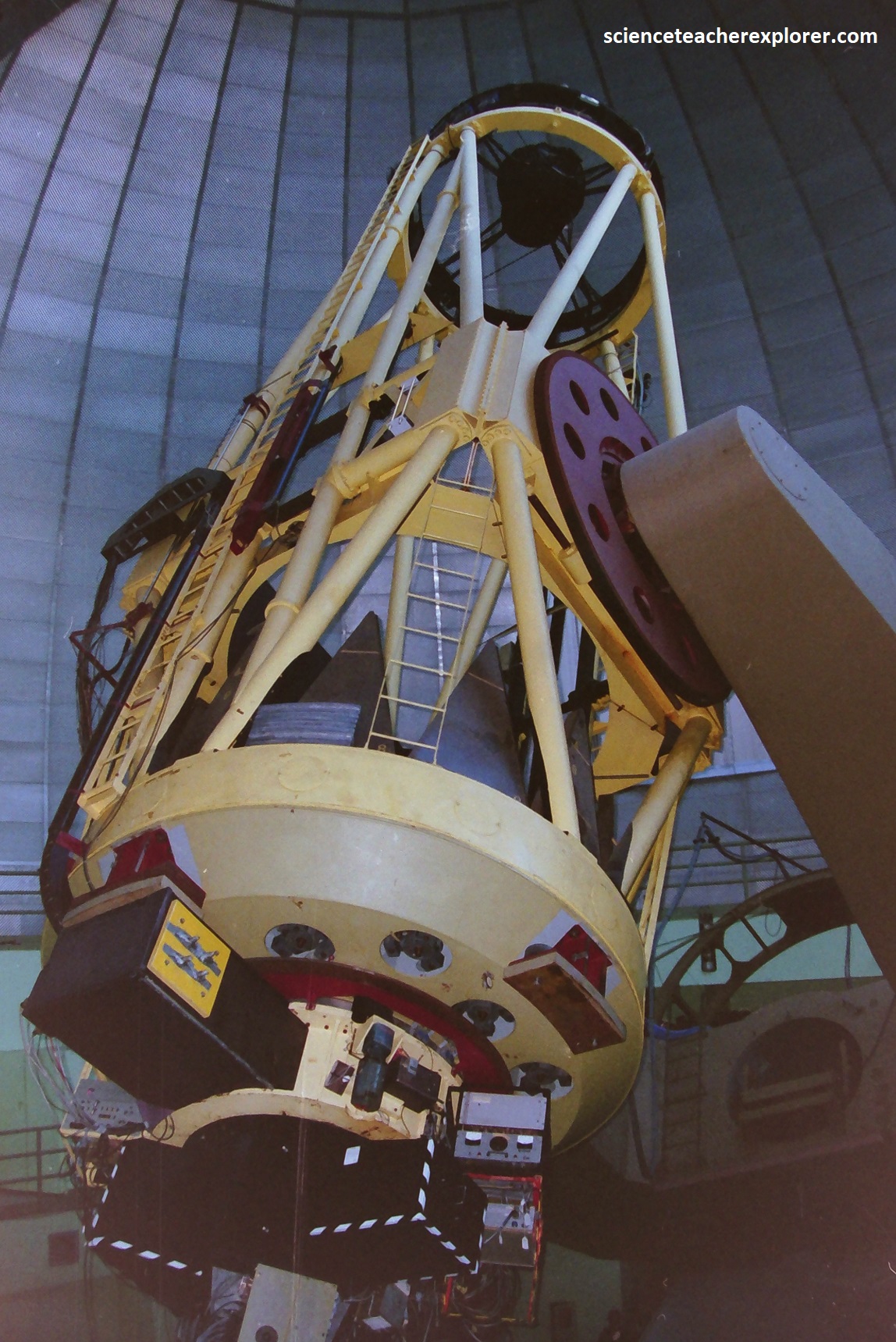
Another notable visit/tour that I made, was to the “Lick Observatory 1996”. The Lick Observatory was/is an astronomical observatory owned and operated by the University of California. Pictured above, it is on the summit of Mount Hamilton, in the Diablo Mountain Range just east of San Jose, California. Our group’s focus was on the C. Donald Shane telescope, (3.05m reflecting telescope). Pictured above, it was noted for having three foci, prime focus, Cassegrain focus, and coudé focus. After several decades of use, it was also fitted with an early adaptive optics system. The Shane telescope was the largest and most powerful telescope at the Lick Observatory in 1996, and was the second-largest optical telescope in the world when it was commissioned in 1959.
My NEWMAST grant to the Ames Research Center provided me with a wide variety of experiences that including research laboratory observations, presentations, and a ‘shadowship’ with a real NASA pilot. It enhanced me with the knowledge of space and aeronautics and motivated me to incorporate the supplied materials into my science classrooms for the next several years.
 Explorer/Trekker