Xi’an, China 2008
In July of 2008, I flew to China with a small group from my school district in Utah. Our first destination was Xian, China. Xi’an was the eastern terminus of the Silk Road, and played a very important part in Chinese history. Xi’an is the oldest of China’s four great ancient Capitals, serving as the capital city of 13 dynasties spreading intermittently across a 1,100-year period from 221 BC. A visit to Xi’an was at the top of my bucket list.
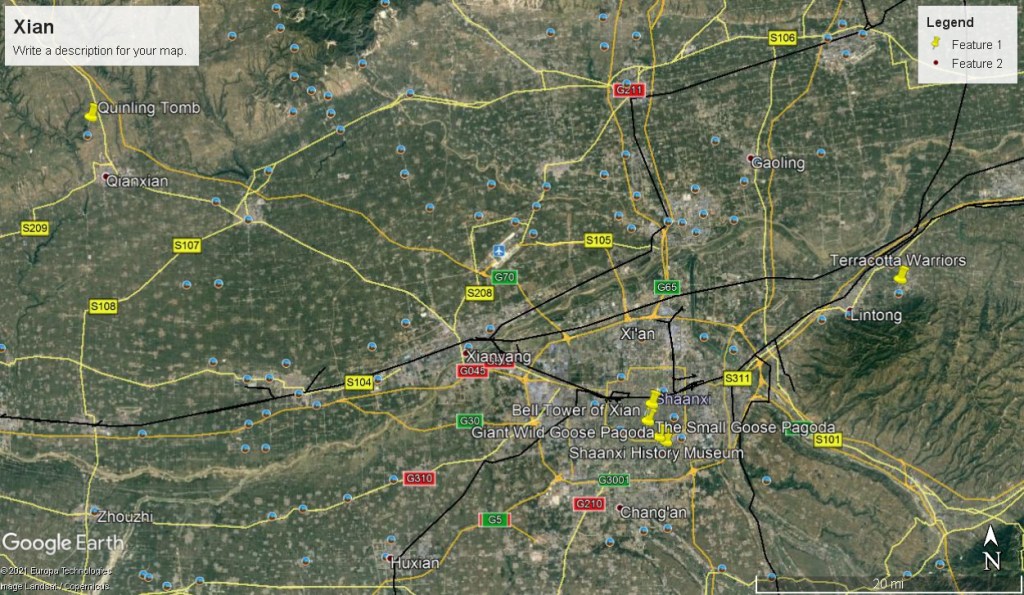
Pictured above, Xi’an lies on the Guanzhong Plain in the south-central part of Shaanxi province, on a flood plain created by the eight surrounding rivers and streams. The city has an average elevation of 400 m above the sea level. Xi’an city borders the northern foot of the Qin Mountains (Qinling) to the south, and the banks of the Wei River to the north. Hua Shan, one of the five sacred Taoist mountains, is located 100 km away to the east of the city.
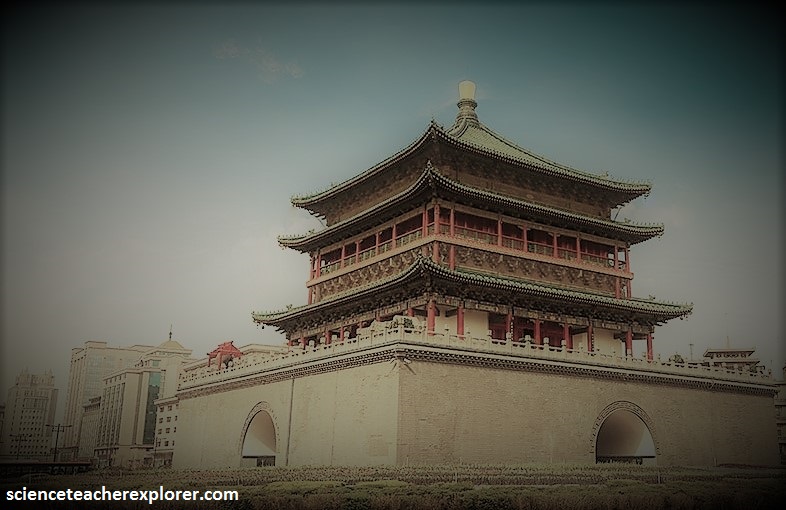
Xi’an is known for its ancient and well preserved city. It all started about 6000 BC at the Banpo village. The next important step in Xian’s history was in 221 BC when the first emperor of the Qin Dynasty made Xi’an the capital of China from the Qin through to and including the Tang Dynasty which ruled from 618-907 AD. Barring some interruptions it was the leading trading city in China, being the terminus of the SI ZHOU ZI LU (Silk Road). Later, when sea transport improved, Xi’an’s importance gradually declined. Pictured above, the BELL TOWER is located at the junction of the city’s main streets. It has been restored, we were able to ascend the stairs and look around.
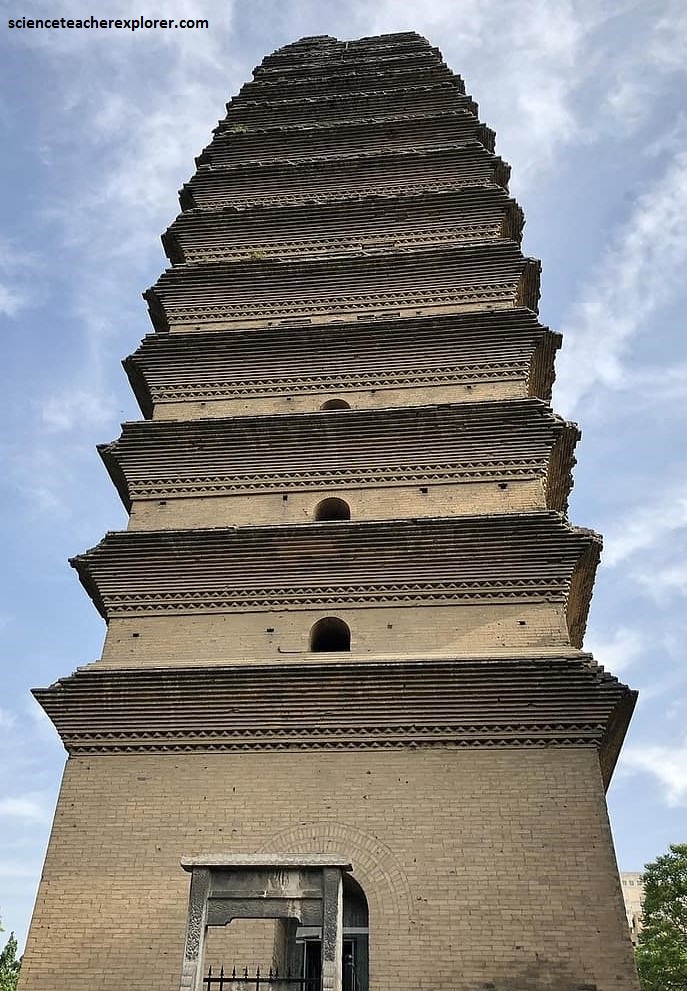
The Small Wild Goose Pagoda Scenic Area is made up of three main areas: Jianfu Temple, the Xi’an Museum and the Small Wild Goose Pagoda. Pictured above, the Small Wild Goose Pagoda was built between 707 and 709 A.D., and was so-called simply because it was smaller than the Great Wild Goose Pagoda.
The Small Wild Goose Pagoda was originally 45 m tall and 15 storeys high but was damaged by the same earthquake as the Great Wild Goose Pagoda in 1556 and is now only 43 m tall and 13 storeys high. Unlike the Great Wild Goose Pagoda, each storey on the Small Wild Goose Pagoda diminishes in width as it rises, giving it its iconic curved appearance.
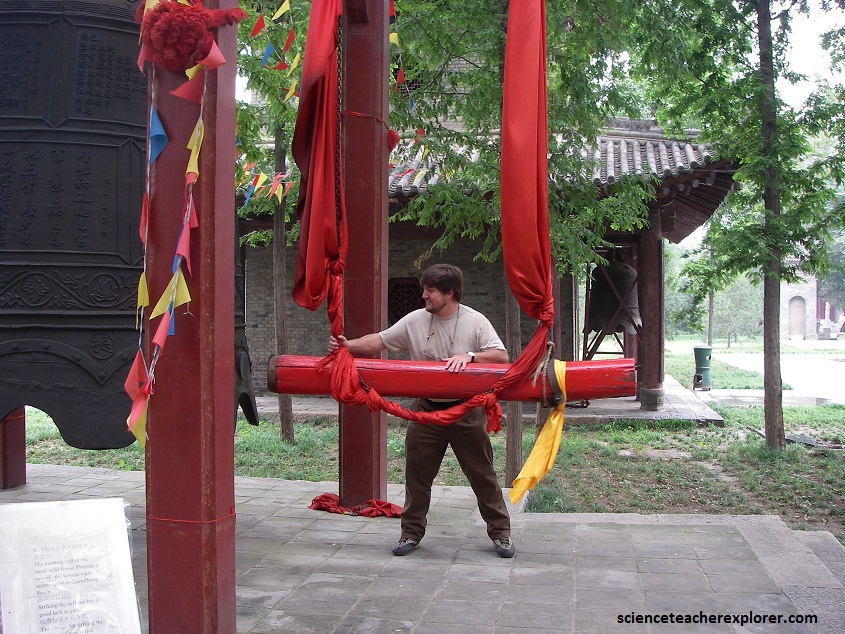
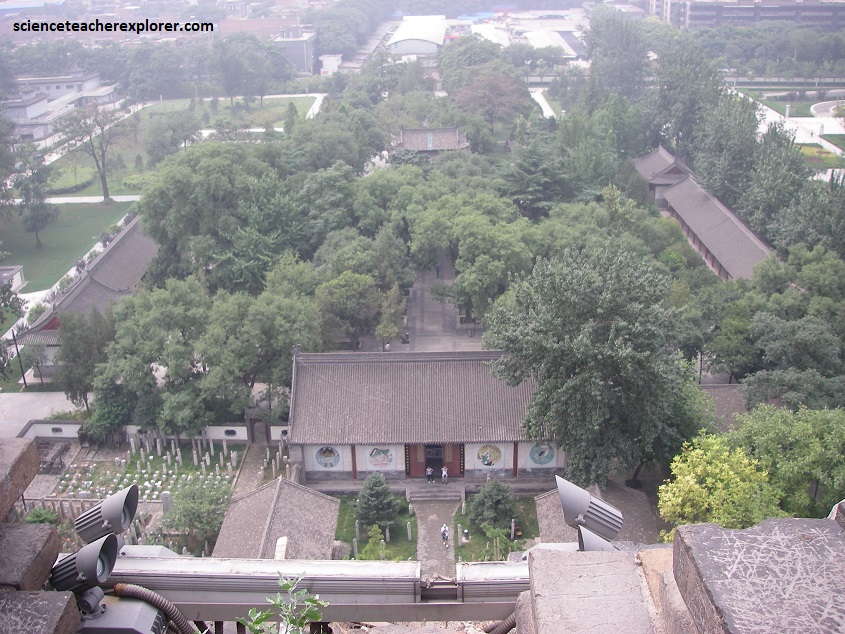
On the Small Wild Goose Pagoda Grounds, we visited the Ancient Bell, which is in the Bell Pavilion and has been preserved in its original condition since 1192. The bell weighs approximately 8,000 kilograms and has more than a thousand characters engraved on its surface. In 1993 it had to be repaired and welded, as it was damaged during the Cultural Revolution, but it has remained virtually unchanged since then. It was said that, back when the bell was first forged, its ring was so deafening that it echoed throughout the city.
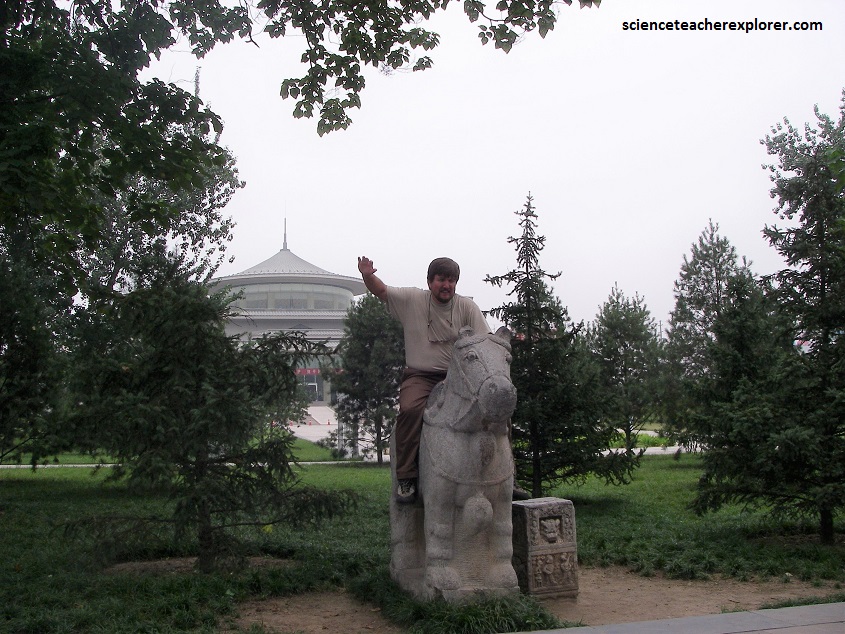
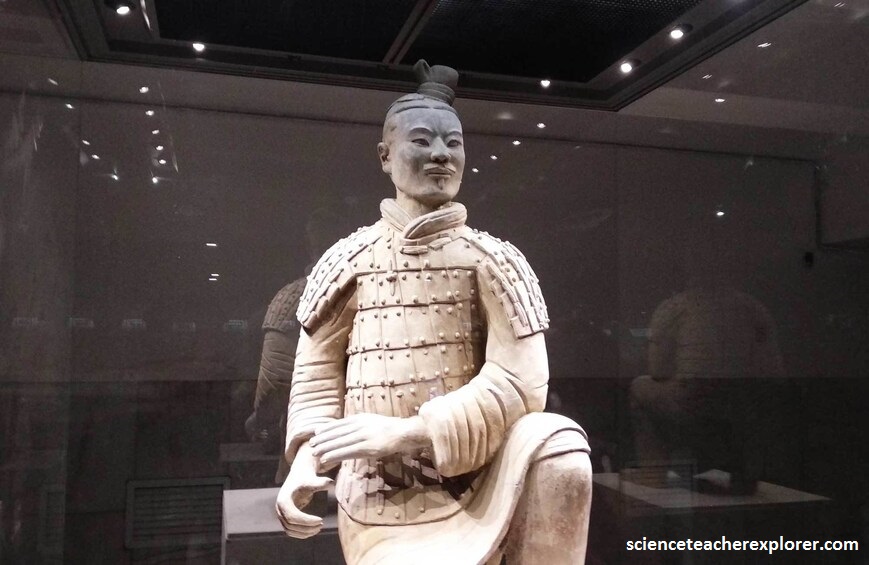
Pictured above, the Xi’an Museum boasts nearly 130,000 relics that all relate to the history of Ancient China and Xi’an specifically. Most of these relics have been unearthed from tombs in the surrounding area. Pictured below, in the Shaanxi Museum, we found stunning jade ornaments, Buddhist statues, stone carvings, porcelain figures, Terra Cotta Warriors and famous pieces of calligraphy, and paintings.
The Small Wild Goose Pagoda Scenic Area is one of the lesser known tourist attractions in Xi’an and, in spite of its elegance and natural beauty, it rarely attracts large crowds. This, coupled with its peaceful gardens and crystal clear lake, makes it one of the more relaxing sites to visit in the bustling city of Xi’an. Though the museum was only built in 2007, Jianfu Temple and the Small Wild Goose Pagoda both have histories that date back over 1,000 years ago.
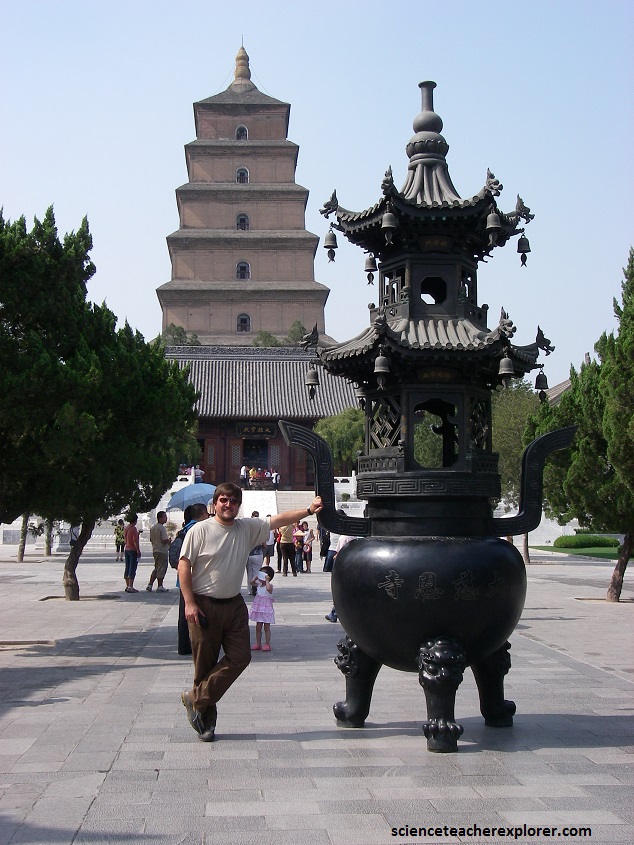
Pictured above, the Giant Wild Goose Pagoda, or Dayan Pagoda, is a true monument to Buddhist culture and architecture. It currently stands at a massive 64 m and is seven storeys high. It is square in shape, in-keeping with the Tang-style of architecture. The history of the pagoda began during the Tang Dynasty, when the famous monk, translator and traveller Xuanzhang entreated Emperor Gaozong to allow him to build a Buddhist pagoda in Da Ci’en Temple. The original building was completed in 652 A.D. and was made of rammed earth with an exterior stone façade. It was originally only 54 m tall and only five storeys high. Its main function was to house the sutras and figurines of Buddha brought to China from India by Xuanzhang. Xuanzhang spent a phenomenal 17 years and travelled through 100 countries to gather these relics, including 657 kinds of sutras. However, being made mostly of earth, the pagoda was not particularly stable. It had to be rebuilt in 704 A.D. by Empress Wu Zetian, who added five storeys to the structure, and was again damaged in 1556 by a large earthquake, which destroyed three of its storeys. During the Ming Dynasty it was once again repaired and renovated, and has remained virtually unchanged to this day.
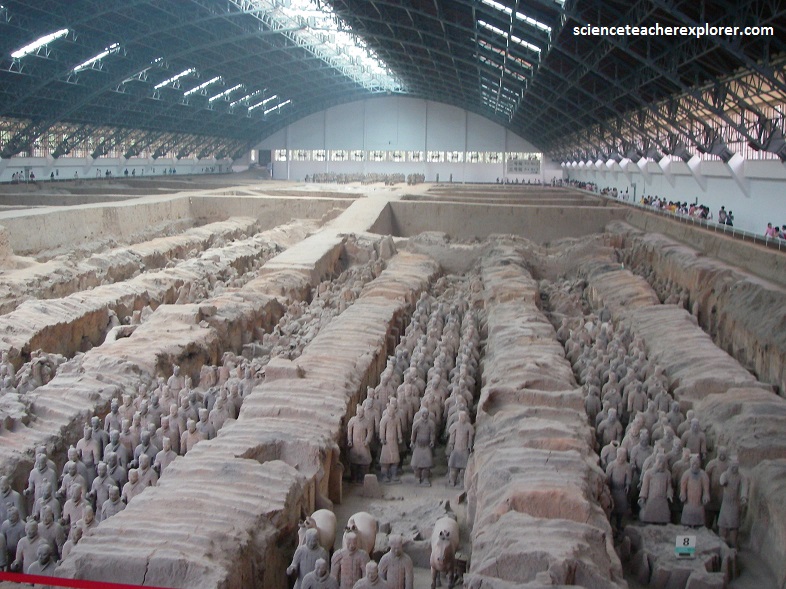
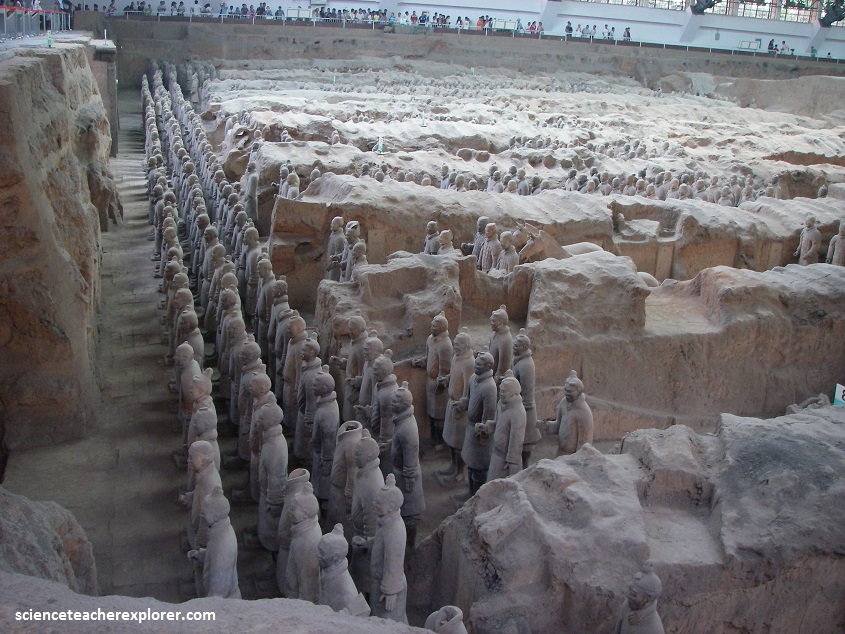
The most famous site to see in Xi’an, a place everyone should see while in the city, is the museum which houses the TERRA COTTA SOLDIERS of EMPEROR QIN SHI HUAGDI (died 210 BC). He was the founder of the Qin Dynasty that ruled China from 221 – 206 BC. He was the man who unified China, standardized money, weights and measures and writing. He linked and extended the Great Wall. Pictured above, in the nearby Lintong, (35km east of Xian), there were statues found by a farmer that were arranged in a tunnel (today called pit1) that was 210m long, 60m large, and made of nine parallel corridors 3m wide, (later two more of these pits were discovered). The term ‘pit’ is imprecise, as the floor was tiled and the ceiling was made of pine logs and waterproof plastered, and the whole thing was carefully buried about 1.5m deep. The corridors of pit1 contain about 8000 heavy terra cotta statues in life-size scale (actually larger than life size) representing the imperial army’s privates, archers, officers, carts and horses (or it may be more appropriate to say all the privates, al the archers, etc.). The pits discovered later contain statues as well: in pit2 there are 2999 soldiers, two officers, 116 horses, and 89 carts, while in pit3 there are 69 soldiers and a cart, probably that of the main officer.
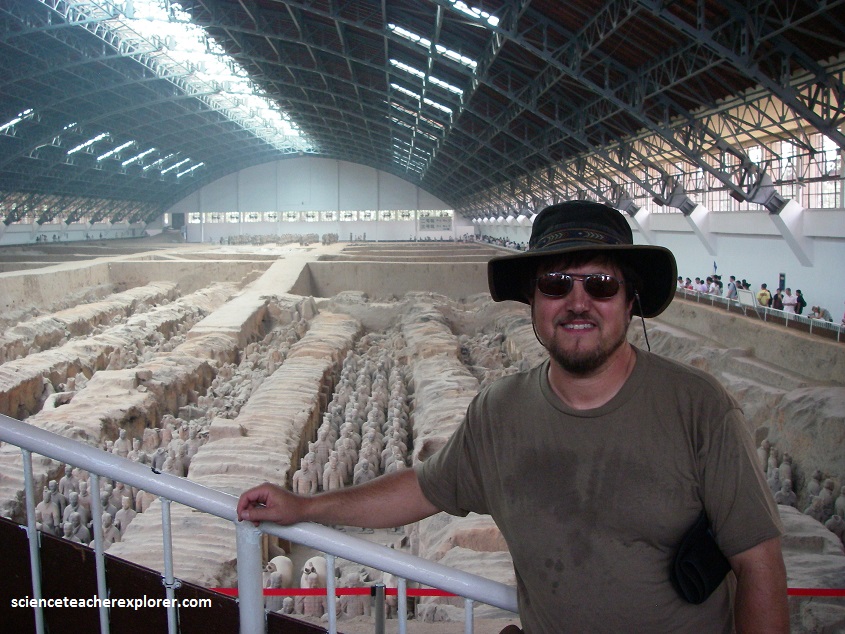
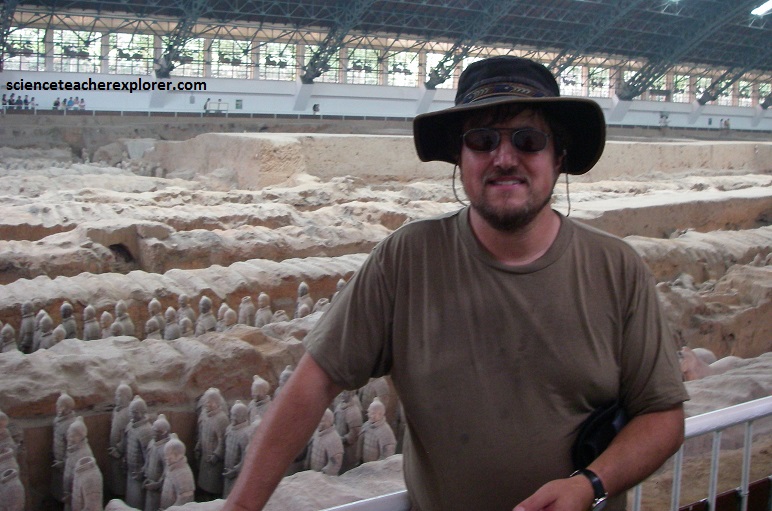
Pictured above, the statues show a variety of expressions and clothes; their heads could be exchanged and were sculptured and baked separately, to be then inserted in a special cavity in the neck. The terra cotta Qin army figures look dressed for combat, except that they have no weapons. But large quantities of bronze weapons, especially arrows, have been found in the eastern corner of pit1. The corridors look as if they were previously explored, an maybe on that occasion the weapons were removed, possibly during a rebellion that occurred in 206 BC, and so we cannot be sure if the army was originally “armed” or not.
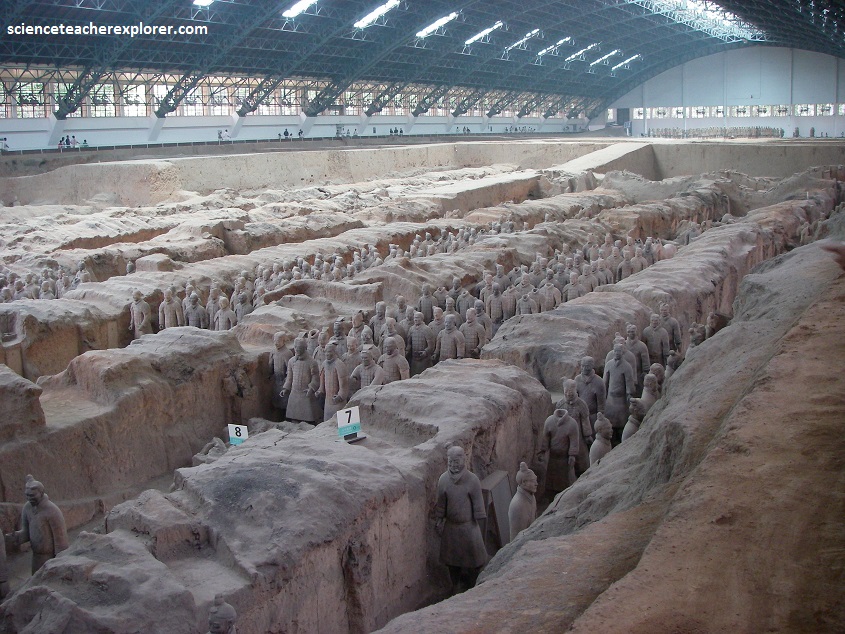
Pictured above, to accomplish such a gigantic project of burying an entire replica of his army together with him, Qin would have needed to mobilize several thousand trained workers. The statues are very heavy (some weighing hundreds of kilos each) and were backed in special workshops using a delicate and long process (that took 5 days), which the archaeology experimenters of today have found hard to reproduce. These workshops were outside the funerary complex, so each statue had to be packed, carried down into the tunnel, and placed in its final location based on the actual layout of the army in the field.
Just outside this main display, (and on the west of the mausoleum), are two small buildings housing some of the warriors and chariots in one, and a bronze chariot with horsed and driver inside the other. One represents a warrior driving a 4 horsed chariot, while the other is a kind of carriage or wagon driven by a sitting postilion and pulled by 4 horses, (it could be the representation of the transport of the king’s coffin, but the wagon is empty).
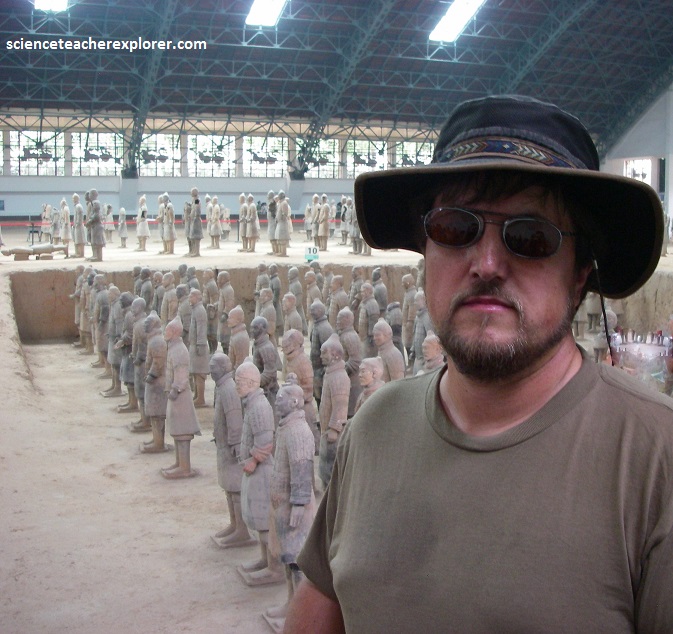
The Terracotta Army is commonly regarded as one of the Eight Wonders of the Ancient World and has received great international fame and praise throughout the years. In 1987 it was listed by UNESCO as a World Heritage Site and has remained one of the most culturally significant sites in China since the day it was first discovered.
The discoveries in the mausoleum area show the close links of the tomb with the celestial order. For instance, the funerary complex, which might be more appropriately called a funerary city, since its external perimeter was 12km long, was made of 3 citadels, on inside the other; the innermost one, with a square base, hosts the tumulus, which was built on three levels. The inspiring principle of all this is the idea of cosmic order among Earth, humans, and the sky, with in its center being Qin, who proclaimed himself as the keeper of such an order, (imaged below).
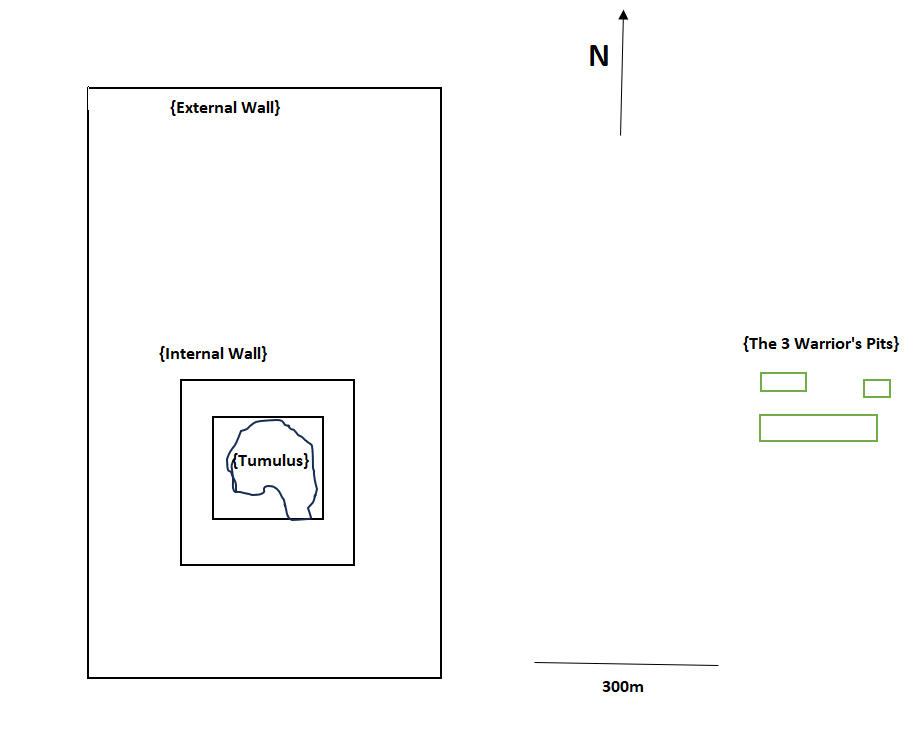
In a spectacular position between the Wei River and Mount Lishan, there is a hill that is 76m tall, (pictured below). According to ancient tradition, the landscape of the area, when seen from above, recalls the profile of a dragon, with the hill as the eye. However, the eye is not a natural hill but rather the funerary tumulus, as well as the ideal center, of the gigantic funerary complex of Emperor Qin. The tumulus, with a square base almost 500m wide, is one of the largest ever built on our planet, and was once probably much higher than it is now. Even though archaeologists knew that this was a funerary complex, no one ever wanted to or was able to excavate its interior, and legend stated that it is guarded by gigantic stone animals. Sim Quin described the interior as a true palace buried in the hill, full of traps and pitfalls. According to him, in the central chamber there is a lake of mercury upon which the bronze coffin of the emperor floats. Sima Qian also stated that a ceiling studded with precious stones reproduces the starry sky, and this assertion is reasonable because we have many wonderful ceilings frescoed with a starry sky in tombs of the Han and of the following dynasties.
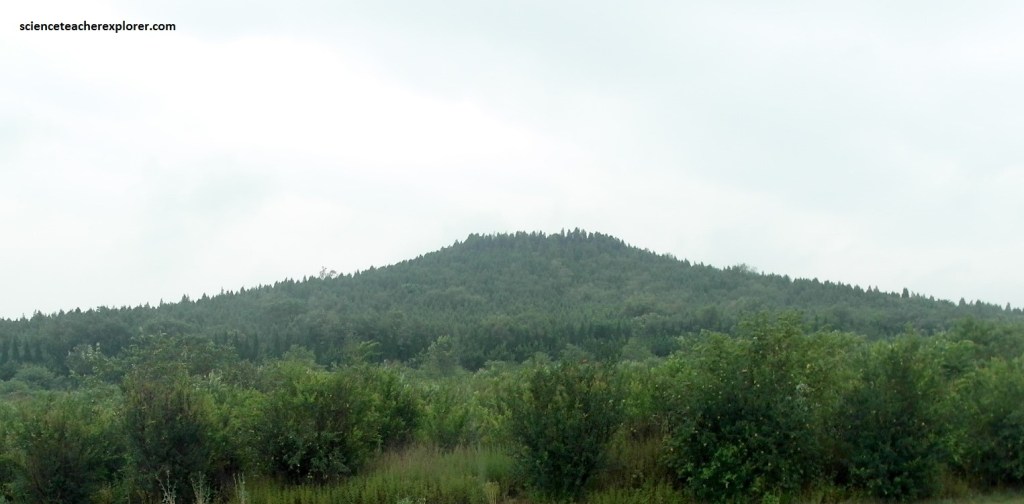
Pictured above, the walk to the top of this artificial burial mound takes a few minutes. At the terra-cotta exhibit, my group saw a diorama of the layout showing the position of the tumulus in relation to the site of the terra-cotta soldiers. The tumulus, which has not yet been excavated, is sure to contain many treasures.
 Explorer/Trekker